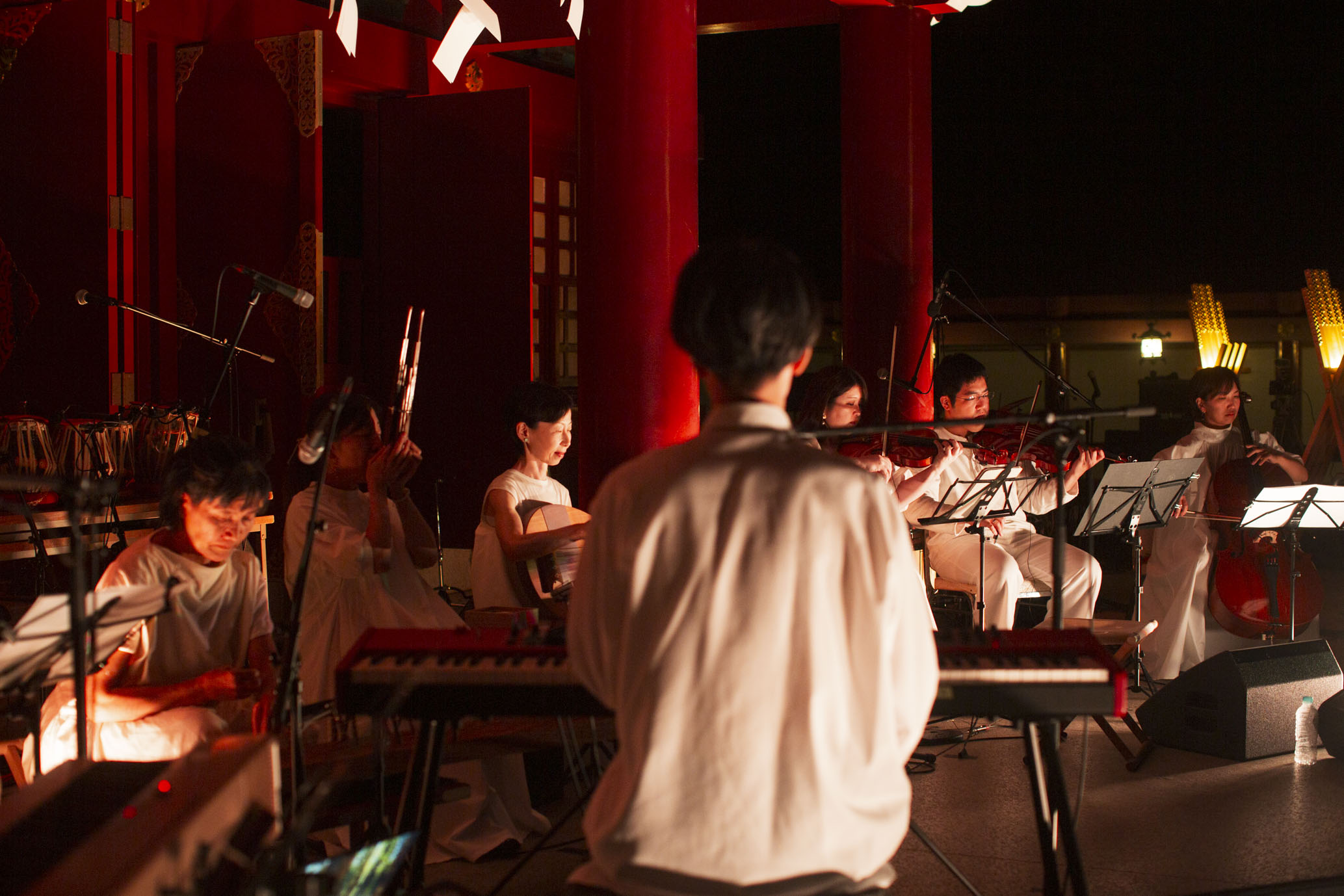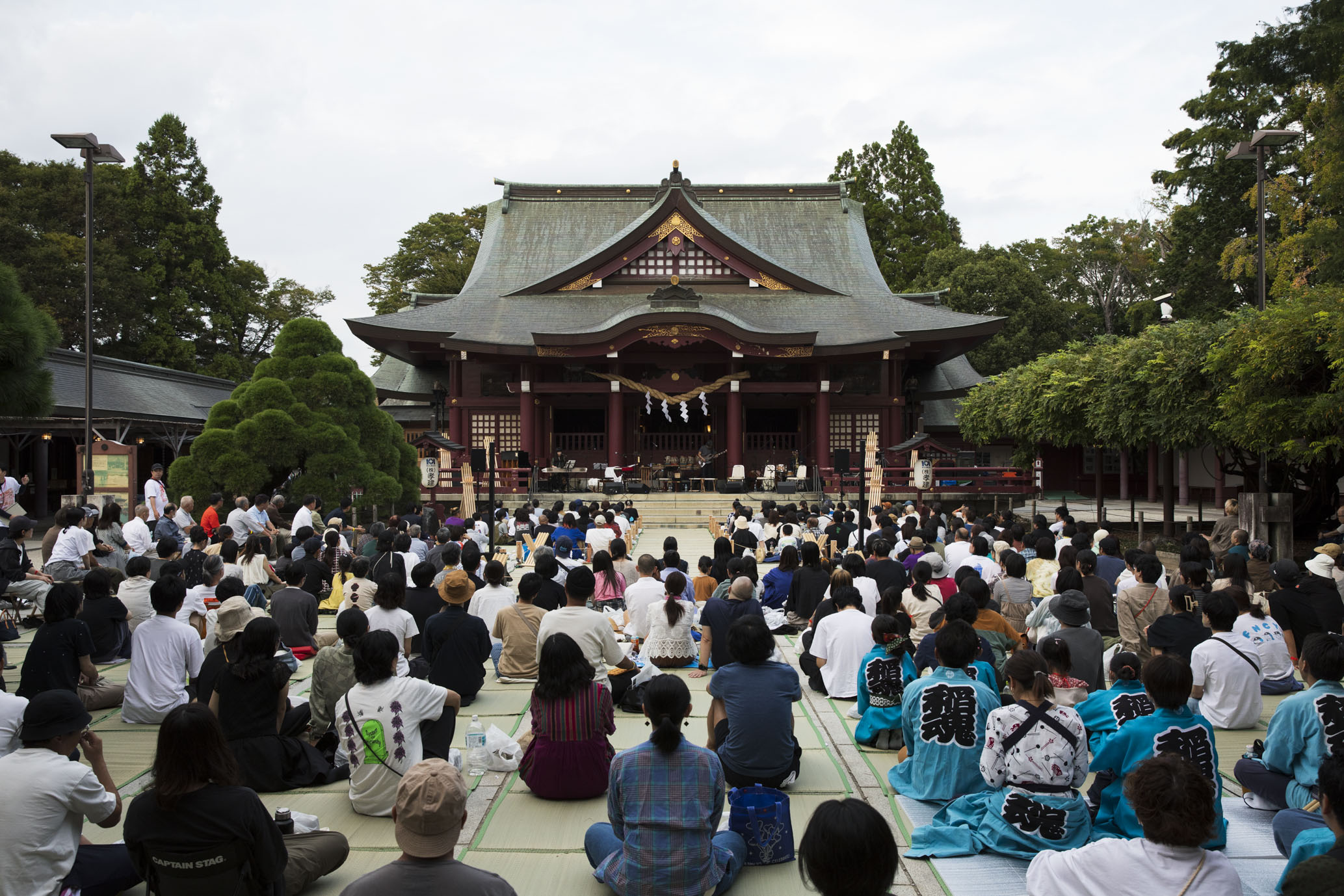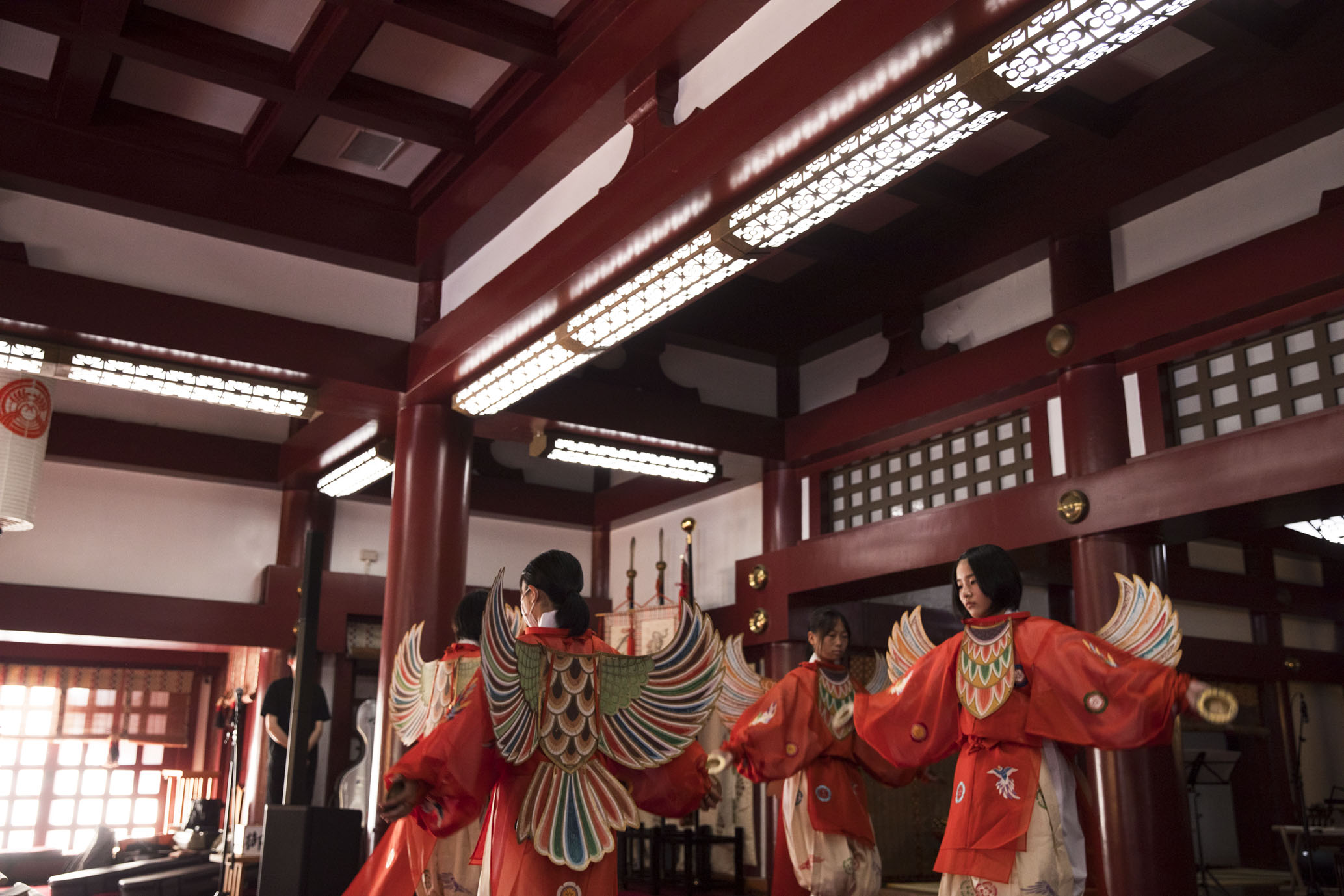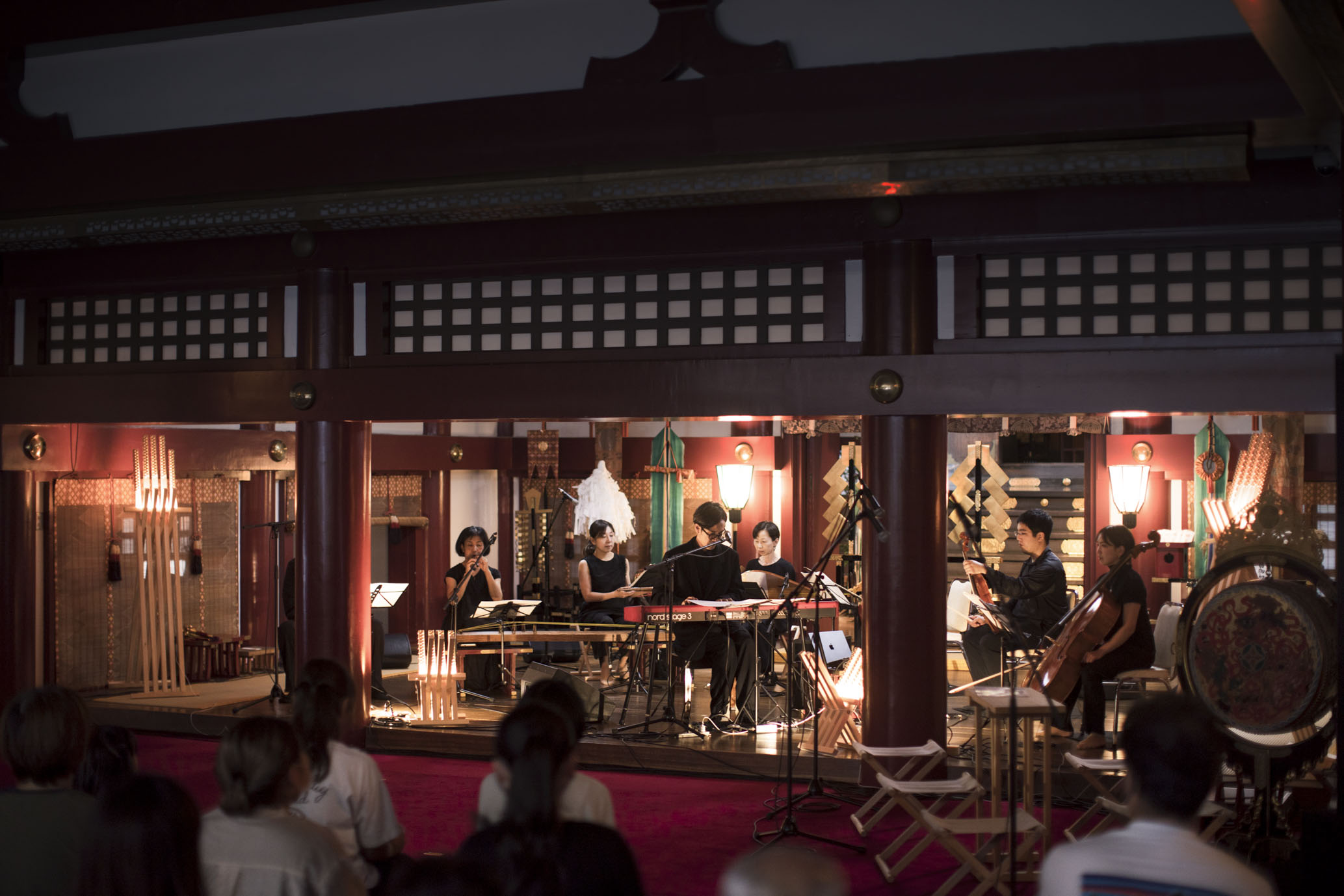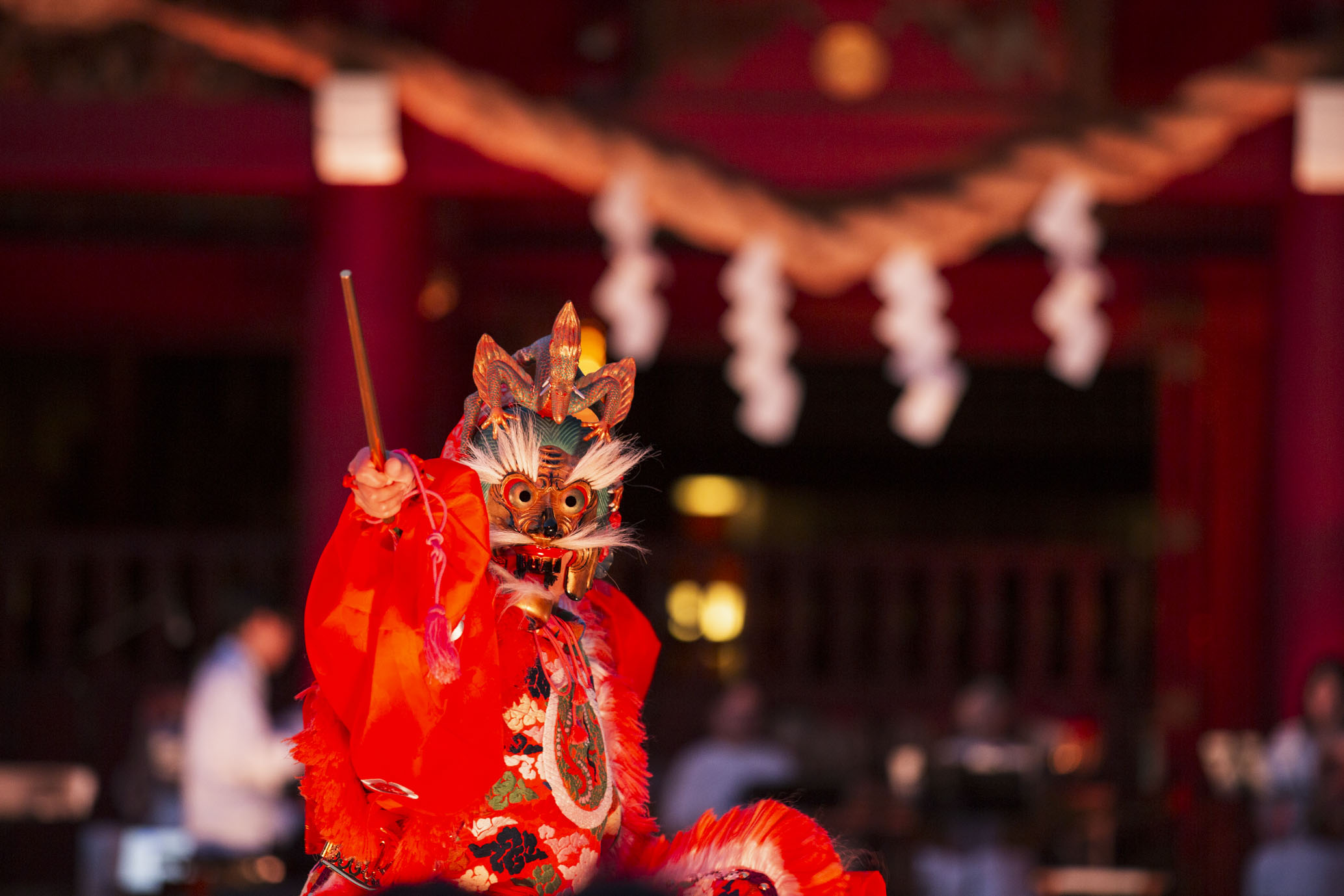

In September 2025, a commemorative offering performance was held to mark the completion of restoration work on the main sanctuary of Kasama Inari Shrine, a nationally designated Important Cultural Property.
Drifter’s CEO Taro Ishida appeared with his project Taro Ishida × TOKOYO, serving as music director and overseeing the overall design of the performance.
Shinto is Japan’s oldest indigenous belief system, deeply intertwined with everyday life, nature, and community.
Within this context, offering performances at major shrines are not concerts in the usual sense, but sacred acts — expressions of respect and gratitude presented to the deities.
Kasama Inari Shrine is one of the most well-known Inari shrines in Japan, with a long history as a spiritual and cultural center.
To be entrusted with designing and performing an offering here is both a rare honor and a significant responsibility.
The initial request came from “Thinking Under the Walnut Tree,” a local cultural initiative that sought not only to celebrate the shrine’s restoration, but to revitalize Kasama’s cultural life by engaging with its essence.
From the early planning stage, a diverse group of artists was envisioned, including U-zhaan, Chinza DOPENESS, Tamaki ROY, and Fuyu ni Wakarete (Saho Terao, Wataru Iga, Reisaburo Adachi).
The shared challenge was clear:
this should not become a conventional music festival.
It needed to function as a Shinto offering, while also serving as a starting point for future cultural continuity rather than a one-off celebration.
Ishida structured the performance around his own music blending Gagaku and classical elements, while carefully considering the acoustics of the shrine architecture and the atmosphere of the grounds at night.
Beyond arranging performance order and musical flow, he designed the narrative of the evening.
Short explanations were woven into the program to communicate — in accessible language — what it means to offer music, why this form was chosen, and how the act of dedication connects past, present, and future.
This framing allowed audiences unfamiliar with Shinto practices to engage with the event not as something distant or solemn, but as a living, meaningful cultural act.
Approximately 350 people attended the performance.
Audience feedback included reflections such as:
Following the event, Kasama Inari Shrine expressed interest in maintaining an ongoing relationship, positioning this performance not as an endpoint, but as a first step toward continued cultural collaboration.
This project demonstrates how traditional religious contexts can be respectfully honored while reimagined as spaces for contemporary expression.
At Drifter, we work not only with music, but with meaning — designing performances that engage history, belief, space, and audience as a unified experience.
To be entrusted with an offering performance at one of Japan’s most respected Shinto shrines, and to shape it as a bridge toward future culture, represents a defining example of this approach.