
Music Direction & Composition for Honmaru Palace Projection Mapping
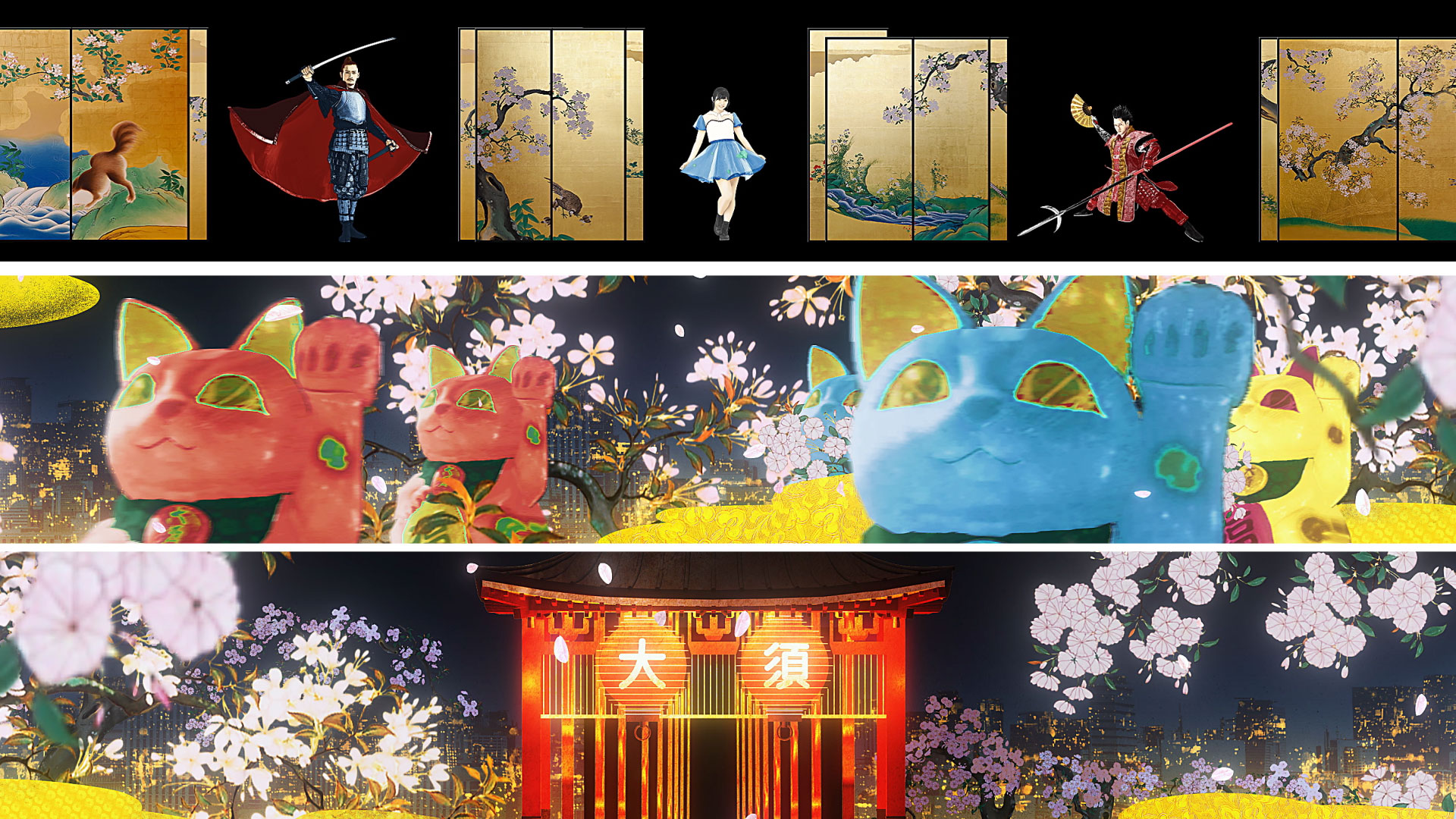
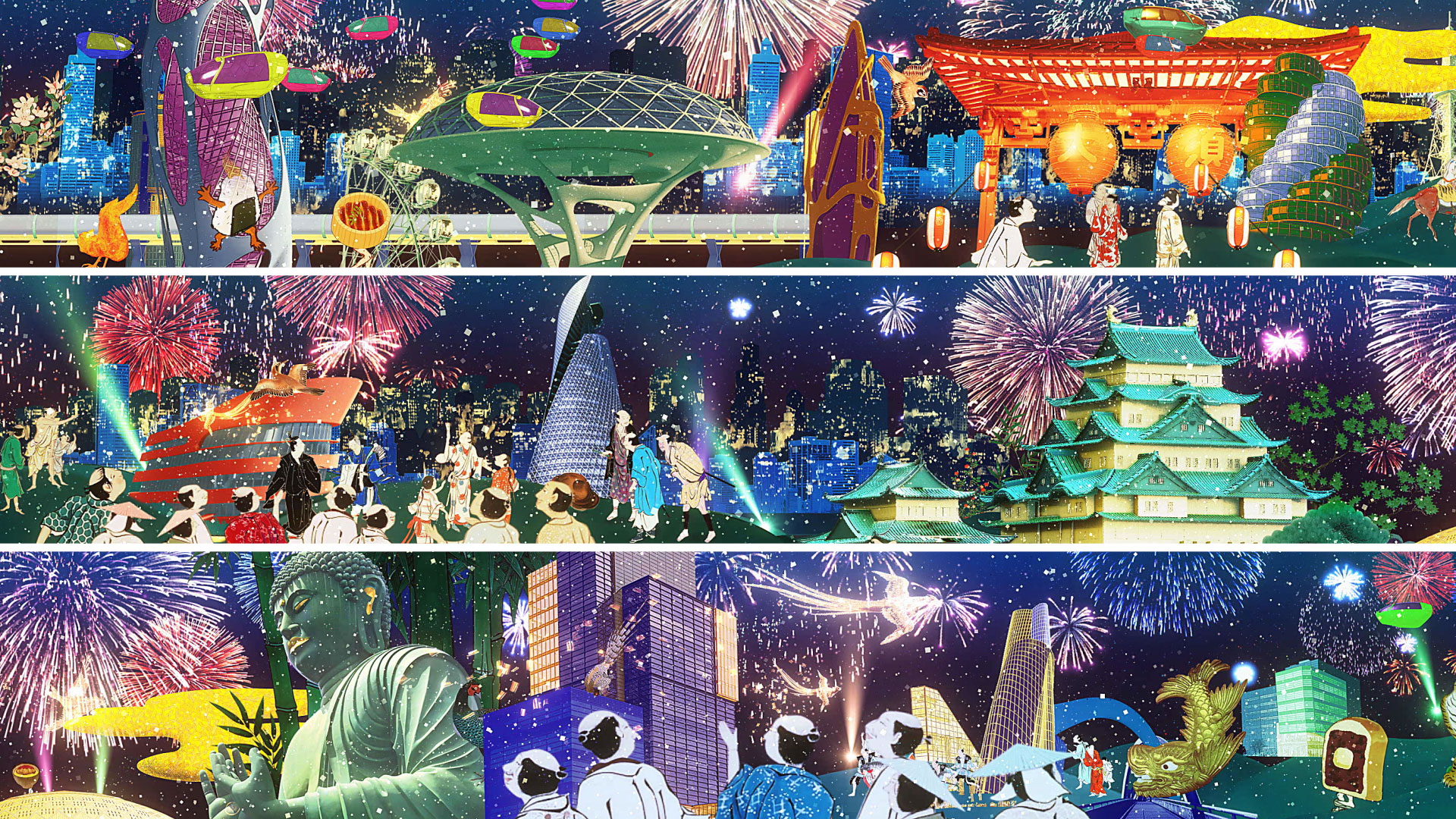
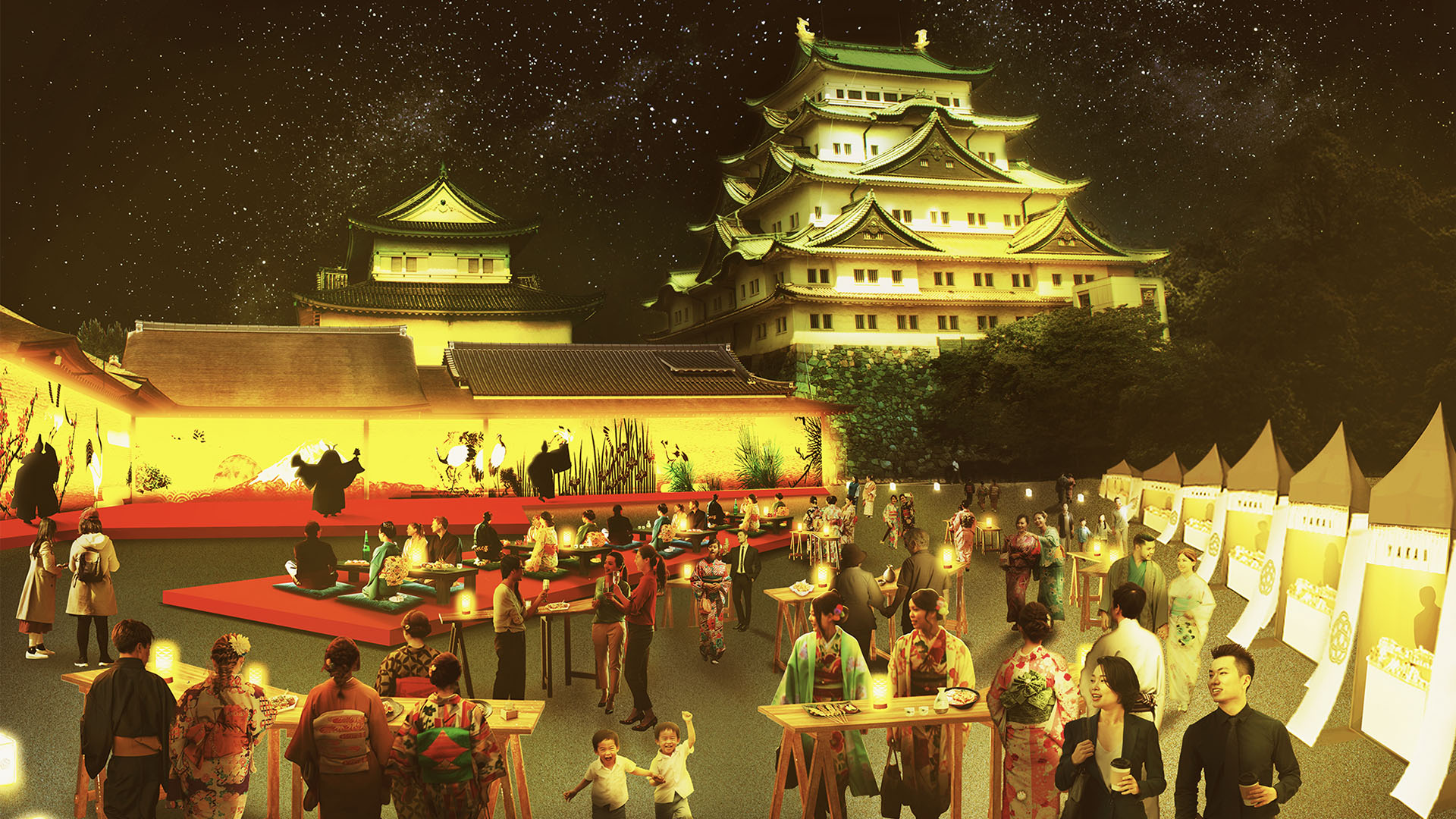
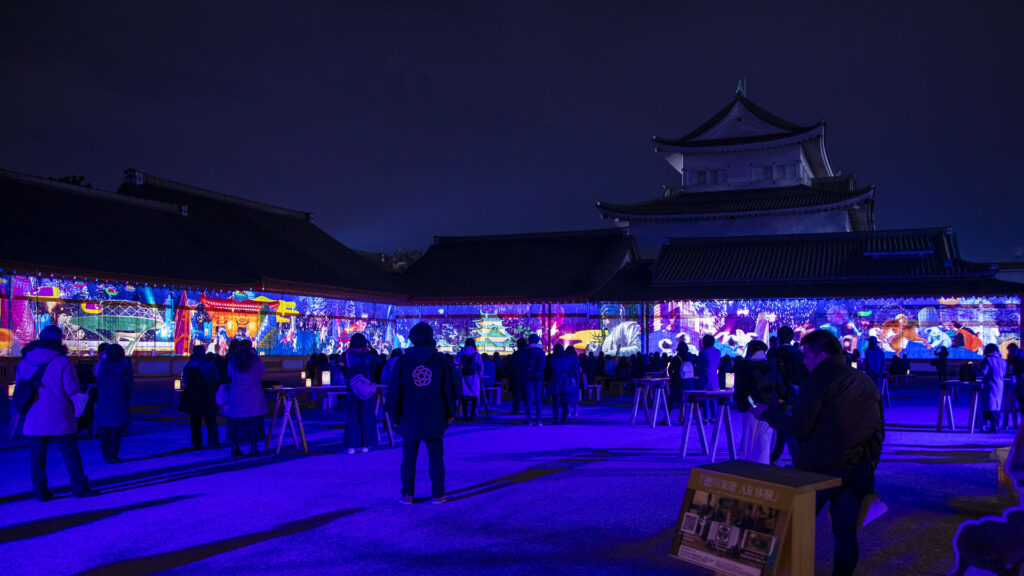
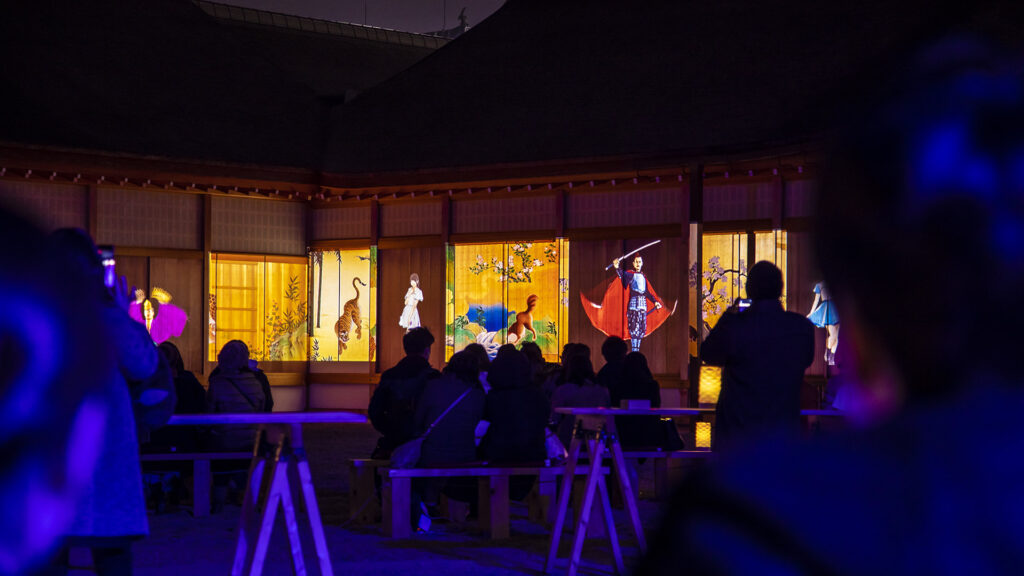
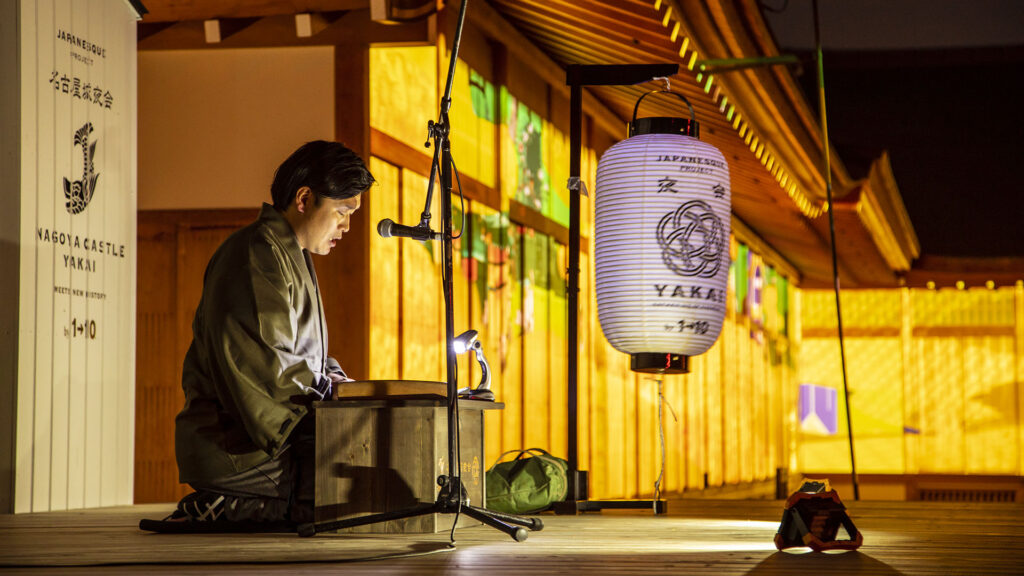
From December 2019 to January 2020, I served as music director and composer for Nagoya Castle Night Gathering, a nighttime event held at the Honmaru Palace of Nagoya Castle.
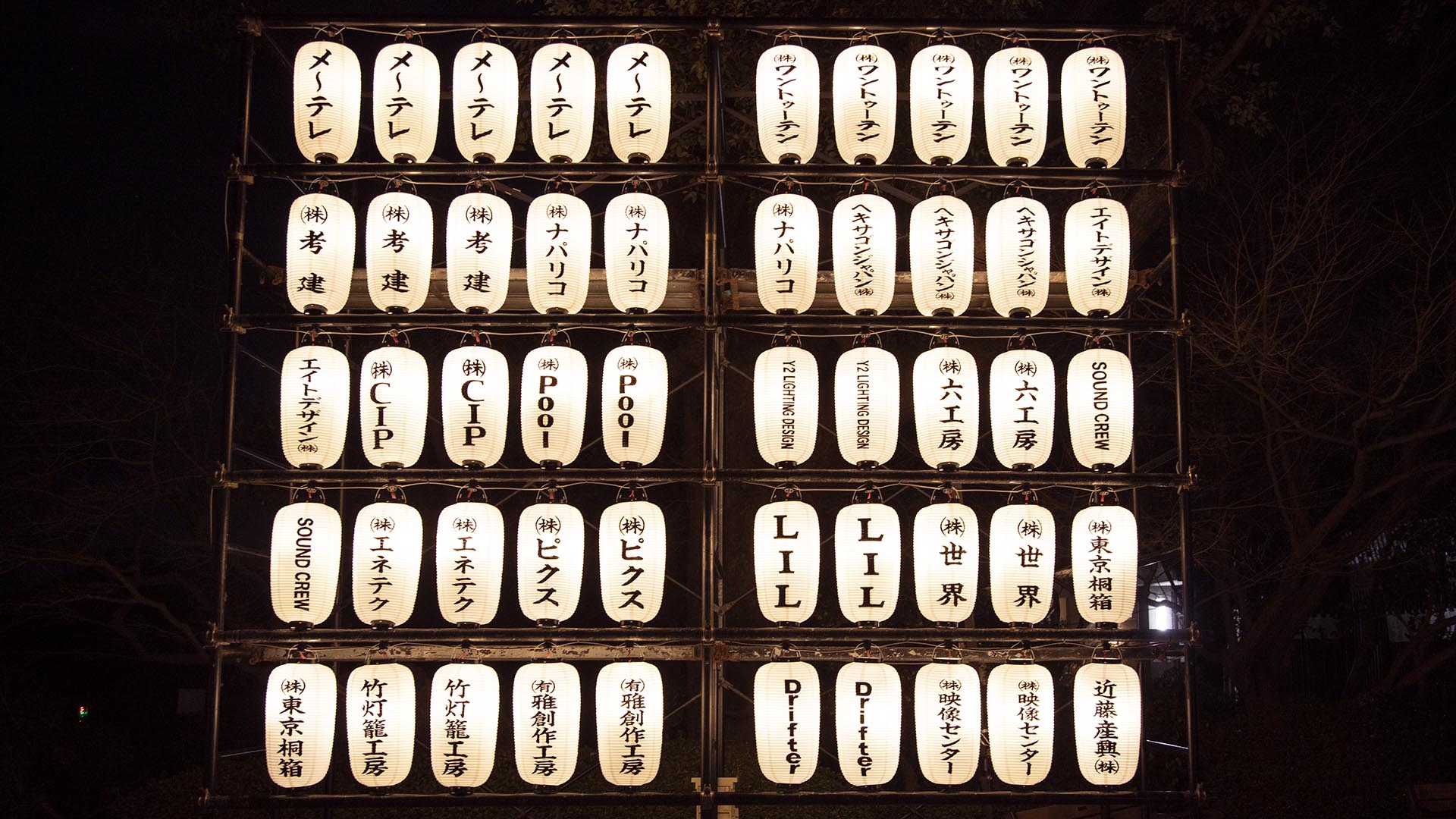
The commission came from a visual production team specializing in spatial experiences (produced by LIL Inc.).
From the initial discussions, the challenges were clearly defined.
The aim was to unify the vast historical space of Nagoya Castle not only through visuals, but through sound as a cohesive force.
At the same time, the music was not to rely on conventional “Japanese-style” aesthetics.
Instead, the project sought a sense of controlled distortion—something slightly unhinged—reflecting the coexistence of madness and intellect often found in Edo-period Japanese art.
This sensibility needed to be translated into a contemporary nighttime experience, while still maintaining accessibility and entertainment value for a broad audience.
In addition, the long approach from the castle gates to the Honmaru Palace required a carefully designed progression of tension, with different sonic layers for the pathway and the main projection area.
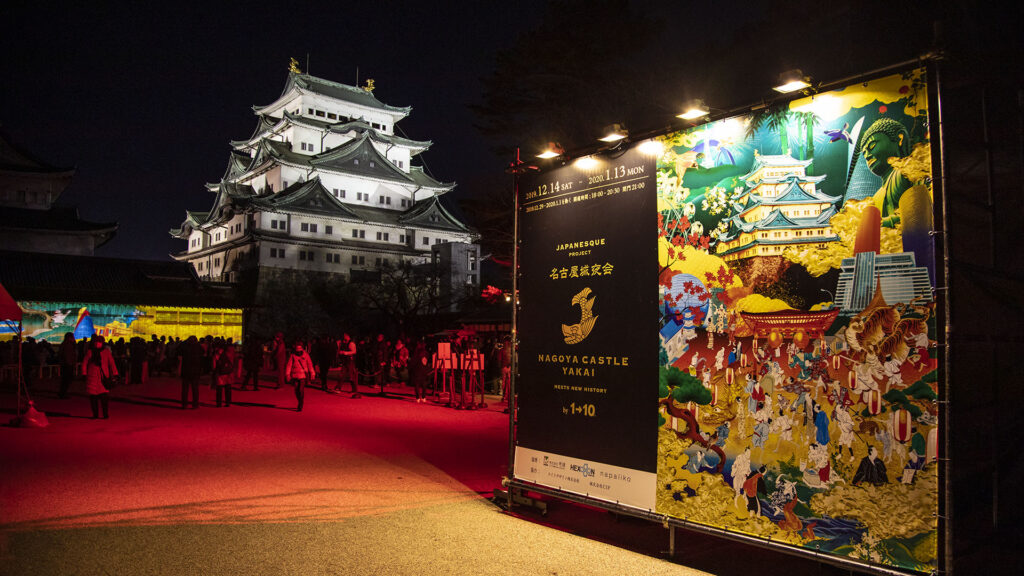
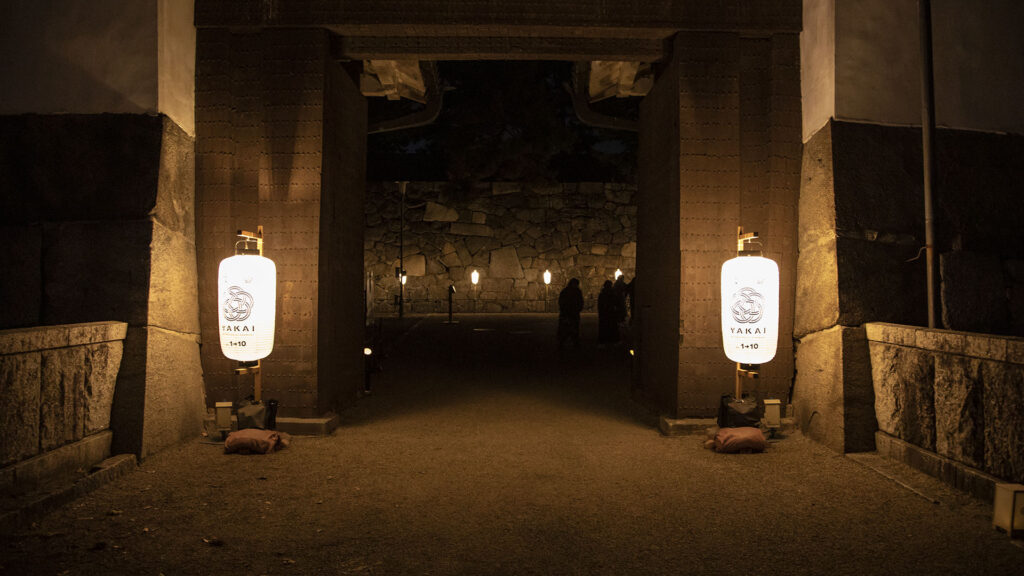
To address this, I chose not to separate music and sound effects, but to design them as a single, continuous sonic world.
Along the approach, the soundscape remains restrained—quiet, ambiguous, and atmospheric—allowing anticipation to build.
Upon entering the main area, the sonic environment shifts distinctly, marking a clear transition in space and perception.
As projection mapping unfolds across the architecture, stark contrasts of black and white give rise to a sense of yūgen—a subtle, profound depth.
Sound played a crucial role in shaping this transition and sustaining the contrast between restraint and intensity.
A key sonic element was the tonkori, a traditional string instrument from the Ainu culture of Hokkaido.
Its unfamiliar timbre—rarely encountered in everyday Japanese life—introduced a sense of otherworldliness, quietly supporting both the intellectual and chaotic aspects of the projected imagery.
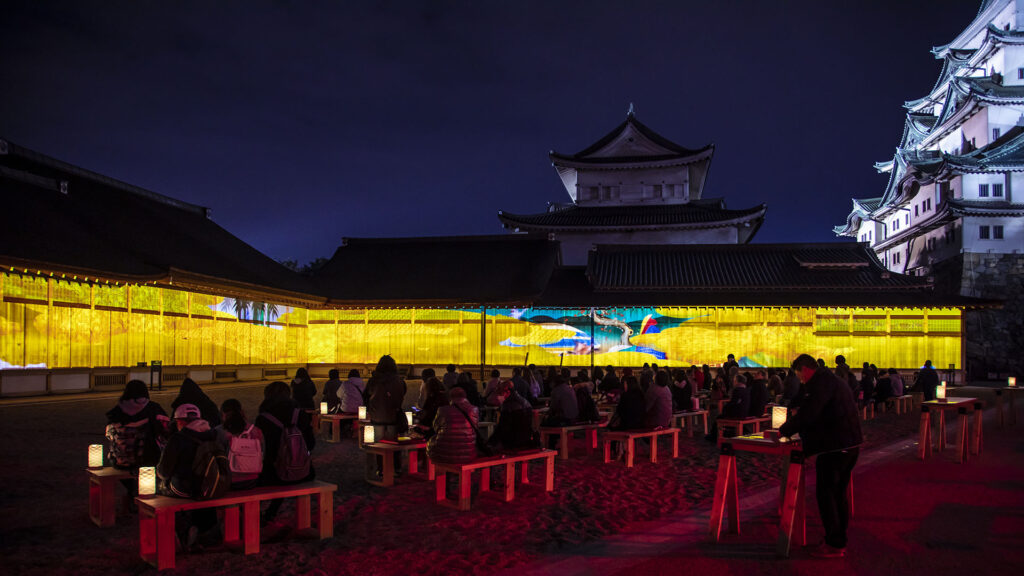
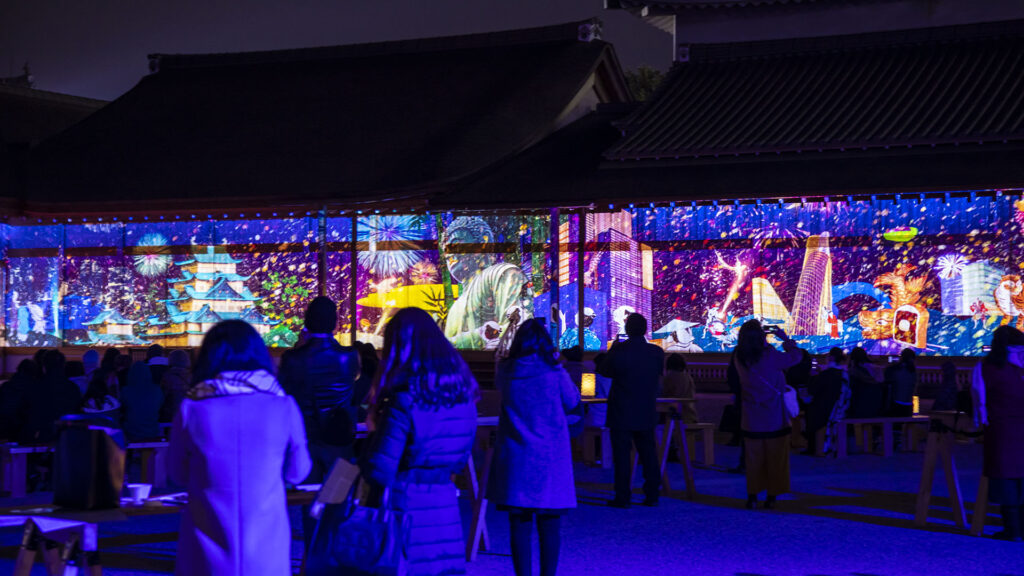
As a result, visitors frequently remarked on the “beautiful yet mysterious string sounds” resonating throughout the castle grounds.
The experience was perceived as beginning not at the main venue, but already along the approach—demonstrating that sound had successfully extended the spatial narrative beyond the visible stage.
This project was not about placing music beneath images.
It was an exercise in orchestrating a large-scale spatial experience through sound—balancing historical weight with contemporary expression, and entertainment with ambiguity.
At Drifter, sound design is approached as an integrated system: music and sound effects, pathways and main spaces, history and spectacle are considered as one continuous experience.
This project exemplifies the kind of work that benefits from early-stage collaboration, particularly in large-scale spaces with strong cultural and historical contexts.