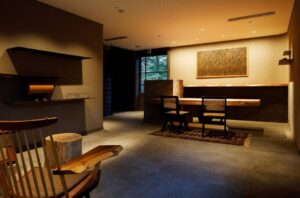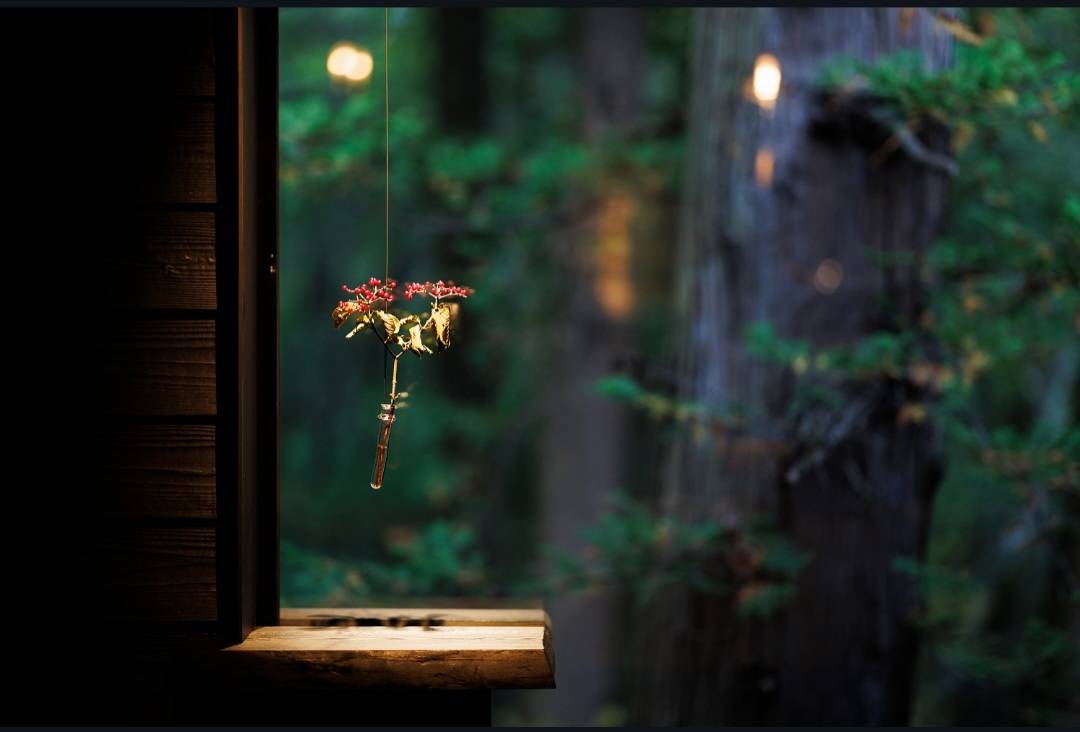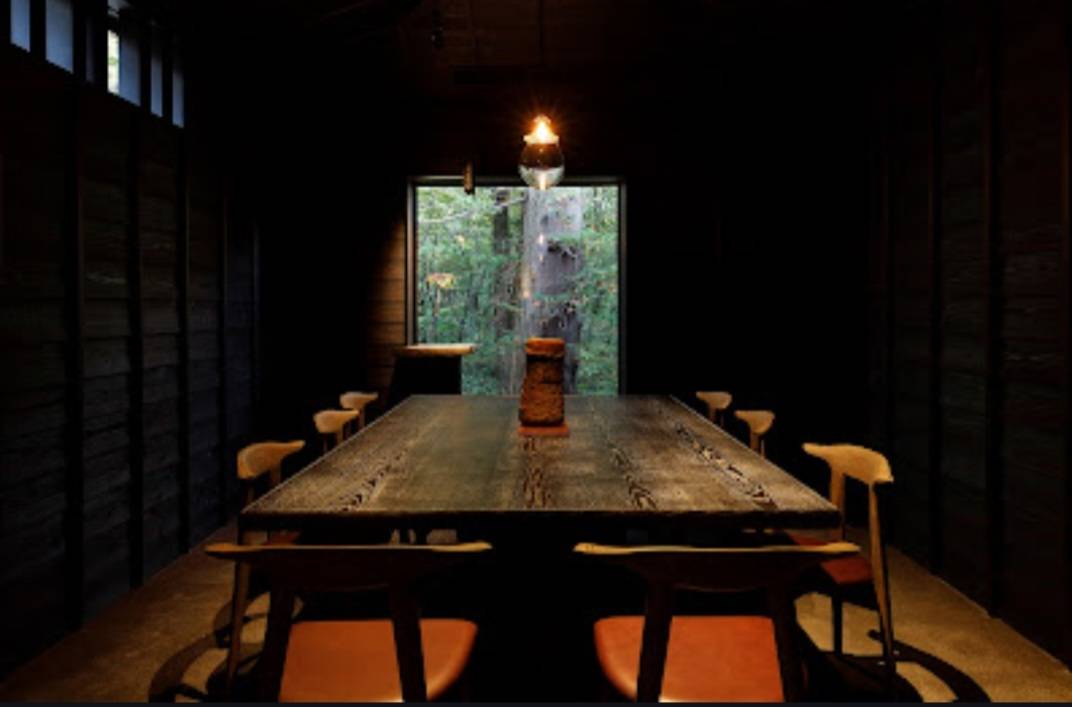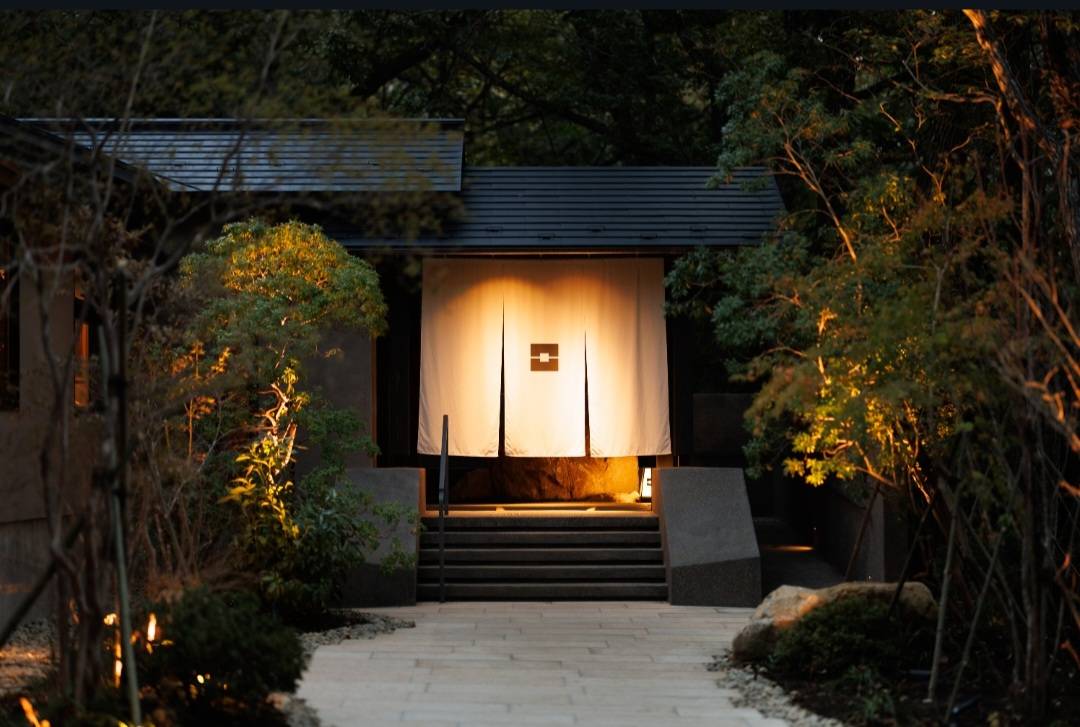

I am responsible for creating the spatial music that flows throughout Nasu Bettei Kai, a hot spring inn widely regarded as one of the most distinctive retreats in the Nasu region.
This project began as part of a broader initiative by Sansuikaku, a long-established ryokan in Nasu-Shiobara, to explore new possibilities for what a contemporary ryokan can be.
The initial connection was made when Mr. Kataoka of Bettei Kai encountered my gagaku performances and visual works presented in Nasu.
He resonated with the way the music blended naturally into the surrounding landscape and felt that, rather than relying on pre-existing background music, the sound within the inn should be reconsidered from its very foundations.
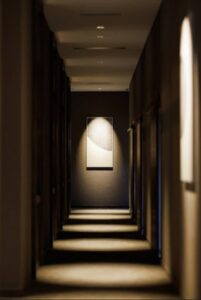
Nasu Bettei Kai is designed around a clear philosophy: to operate the inn as if temporarily borrowing space from nature.
The architecture reflects a deep awareness of the Nasu mountain range, the long history of its hot springs, and the briefness of human presence in this place.
Every effort has been made to minimize environmental impact while allowing the building to coexist quietly with its surroundings.
What was sought here was not music to decorate the space.
It was sound that could gently reconnect the relationship between nature and people.
Rather than adding atmosphere, the goal was to design music as part of the experience of staying itself.
I proposed a musical structure that changes throughout the day, using different instruments and textures depending on the time.
From morning to midday, the music is centered around piano.
From check-in through early evening, it shifts to the shō, a traditional Japanese gagaku instrument.
At night, the sound transitions to the gaku-biwa.
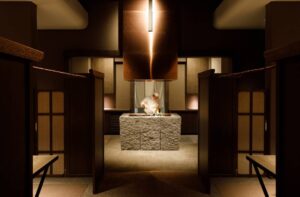
Through these changes, the boundaries between outside and inside, day and night, movement and stillness are designed to flow seamlessly into one another.
The music does not function as a looping playlist, but as a time-based composition that follows the rhythm of a guest’s stay, subtly shaping perception without demanding attention.
As a result, the music has become one element among many that form the experience of the inn—alongside the air of Nasu, the quality of light, and the sensation of the hot springs.
Guests have shared that the presence of sound altered how they perceived the space, and that music remains as part of their memory of the stay.
This project was not about delivering individual pieces of music.
It was about listening carefully to what the place itself values, and integrating sound as an essential component of the environment as a whole.
At Drifter, I approach each project by considering architecture, nature, and the flow of time together, creating site-specific musical experiences from the ground up.
When visiting Nasu, I invite you to experience a calm and essential sense of the region at Nasu Bettei Kai.