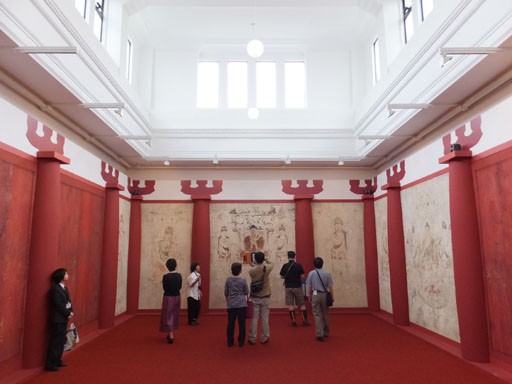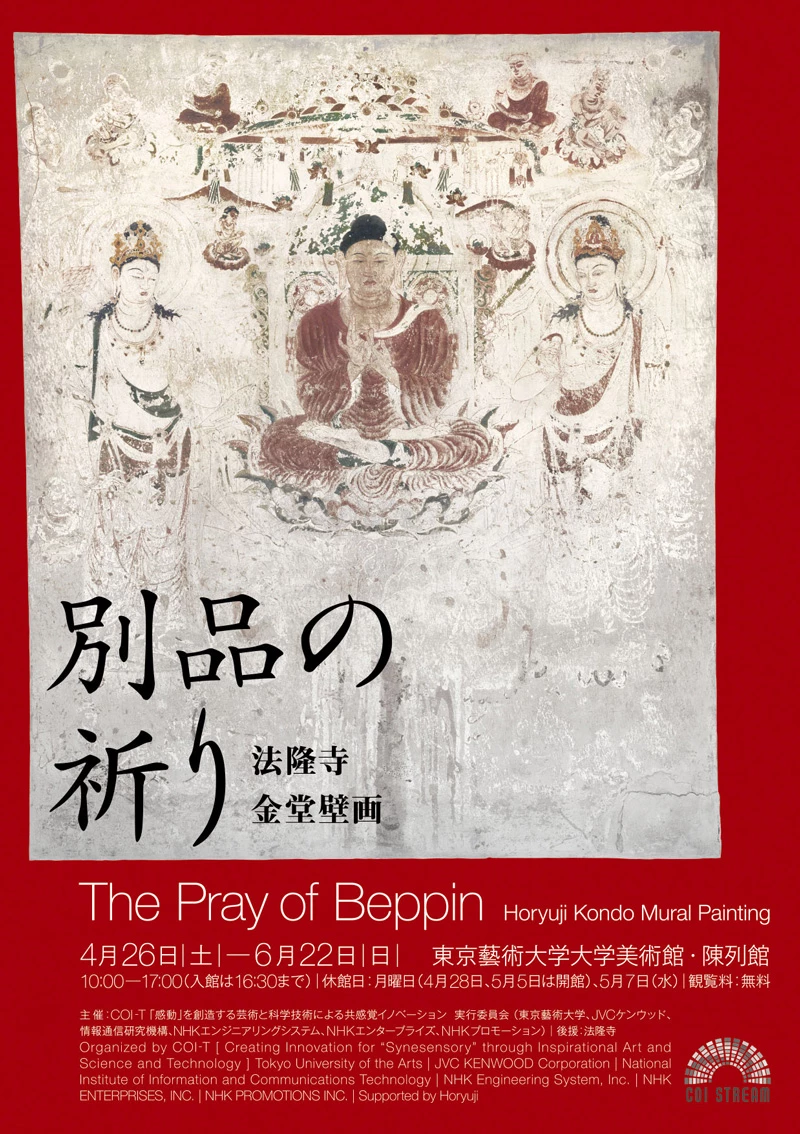

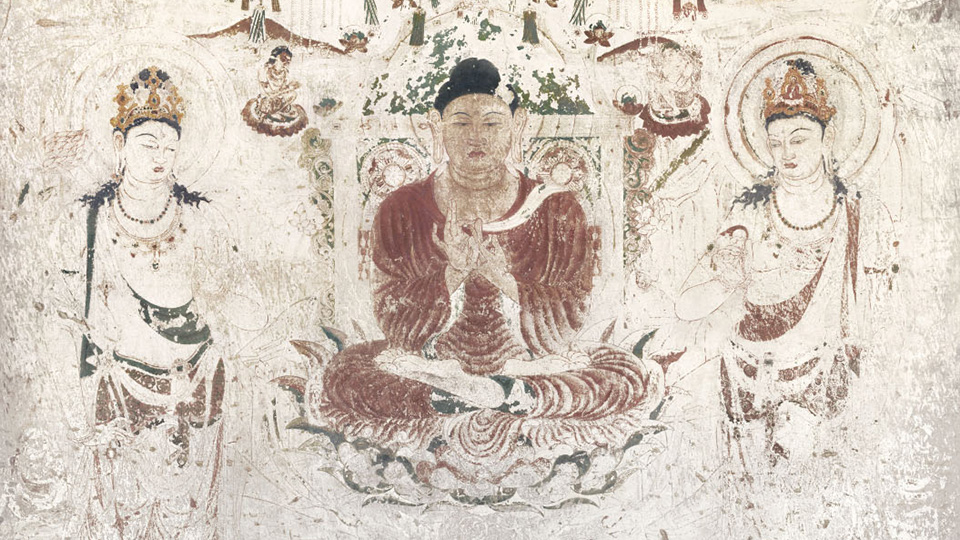
In 2014, Taro Ishida composed two works, Kotsuka(骨歌)and Bansho-ga(万象歌), for an exhibition of the murals of Hōryū-ji’s Golden Hall at the Chinretsukan Gallery of the University Art Museum, Tokyo University of the Arts.
The exhibition presented full-scale reconstructions of the murals. Gagaku and Buddhist chant provided starting points for the two compositions. Ishida approached the commission through a reduced musical language, paying close attention to the presence of each sound and the time around it.
Kotsuka is a solo work for gakubiwa, the lute used in gagaku, performed by Kahoru Nakamura. Ishida imagined the rich sound of an ensemble as a body dressed in elaborate ceremonial robes. For this piece he sought to remove those layers, arriving at the underlying structure suggested by the title’s image of bones.
The sound of one instrument, and the space after each note, became the material of the composition.
The second work takes Buddhist chant as its starting point, using voice, tuba, drums and synthesizer. Its instrumentation moves away from the source material, bringing together sounds with different musical backgrounds.
Through this contrasting ensemble, Ishida considered how a sense of prayer and time might be approached through contemporary sound and the listening body.
Both works are included on Asobi. Listen to the album.
Exhibition record at the University Art Museum (Japanese).
Client: Tokyo University of the Arts