
One instrument. Fifteen minutes of music. Around twenty listeners. And almost twenty completely different worlds.
At a small gathering in a Buddhist temple outside central Tokyo, children and adults listened to the same performance on the shō (笙), an ancient Japanese mouth organ. Afterwards, we invited them to draw or describe whatever they had imagined. The results surprised me: no two responses seemed alike.
Some people saw colors. Others imagined landscapes, abstract shapes, or a singing bird. I had my own image in mind—and apparently nobody else had heard quite what I heard.
I am Taro Ishida, a composer and music director working with Japan’s traditional musical forms as well as contemporary composition. I have spent years listening to Gagaku, yet this afternoon made me reconsider a simple question: when we hear a piece of music, are we all hearing the same thing?
The shō is one of the most distinctive instruments in Gagaku (雅楽), Japan’s longstanding tradition of court and ceremonial music and dance. Gagaku developed over centuries through encounters between indigenous Japanese practices and musical traditions brought from other parts of Asia. It continues to be performed today.
The shō is made from a cluster of slender bamboo pipes. It is a free-reed mouth organ: its player can produce sound while breathing out and while breathing in. Several pitches can sound together, creating luminous, slowly changing harmonies.
That sound is difficult to compare with a familiar Western orchestral instrument. A listener might hear something like an organ or an accordion held at a great distance, but those comparisons only go so far. The shō has a delicacy and texture of its own.
Its music does not always ask us to follow a clear melody from beginning to end. Sometimes it feels less like a tune moving toward a destination than an atmosphere unfolding around us. For me, the shō is a reminder that listening can mean inhabiting a sound, not simply following it.

For additional background on the instruments and tonal systems of Gagaku, see the National Theatre of Japan’s Cultural Digital Library.
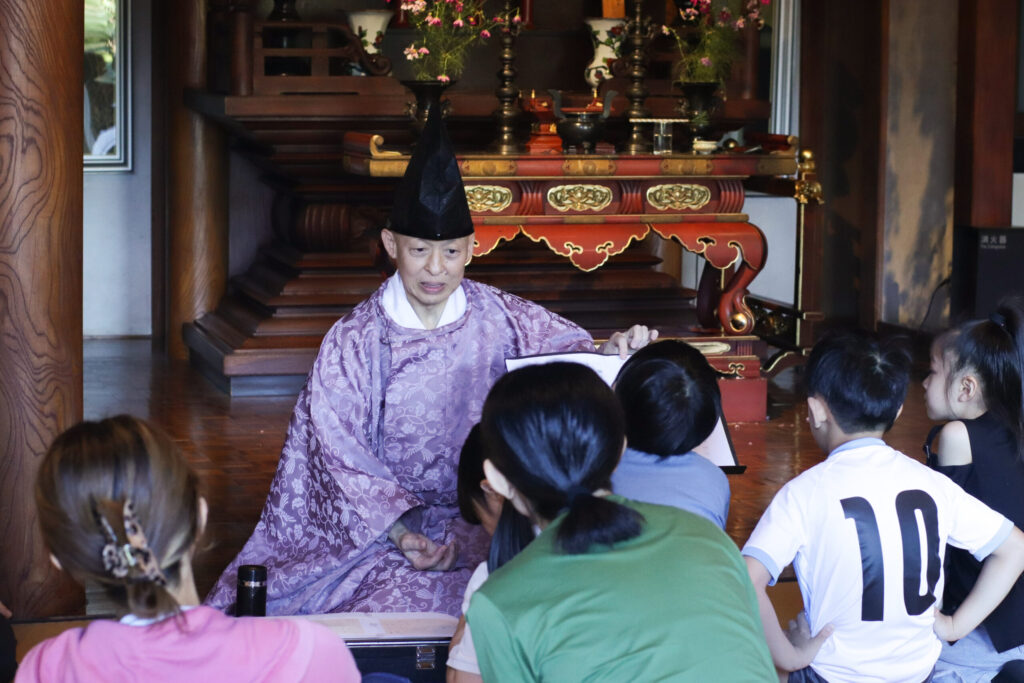
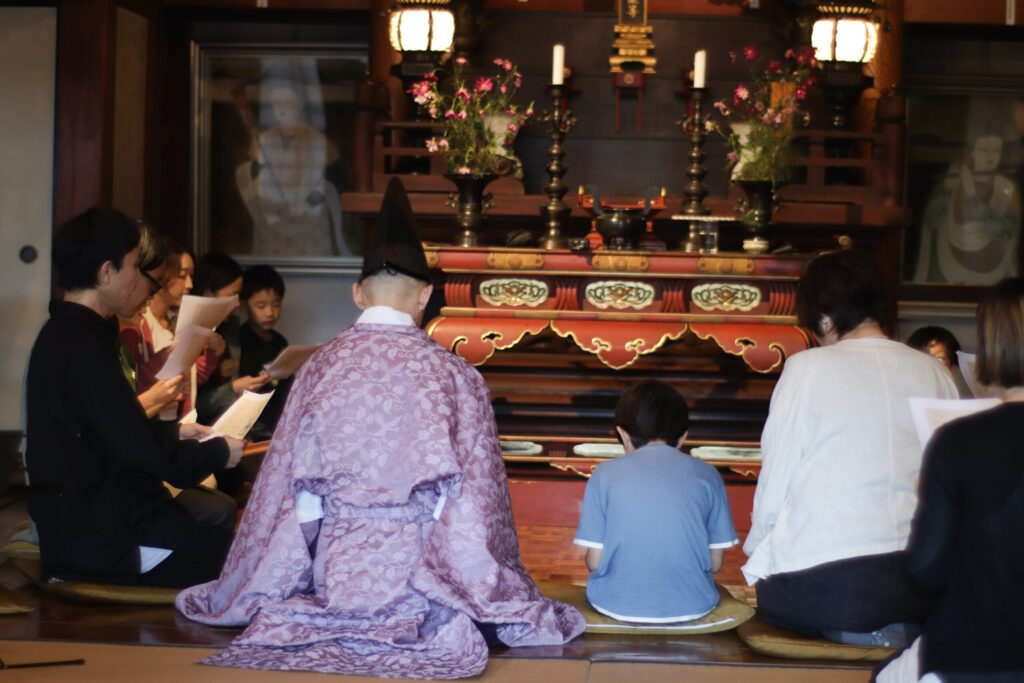
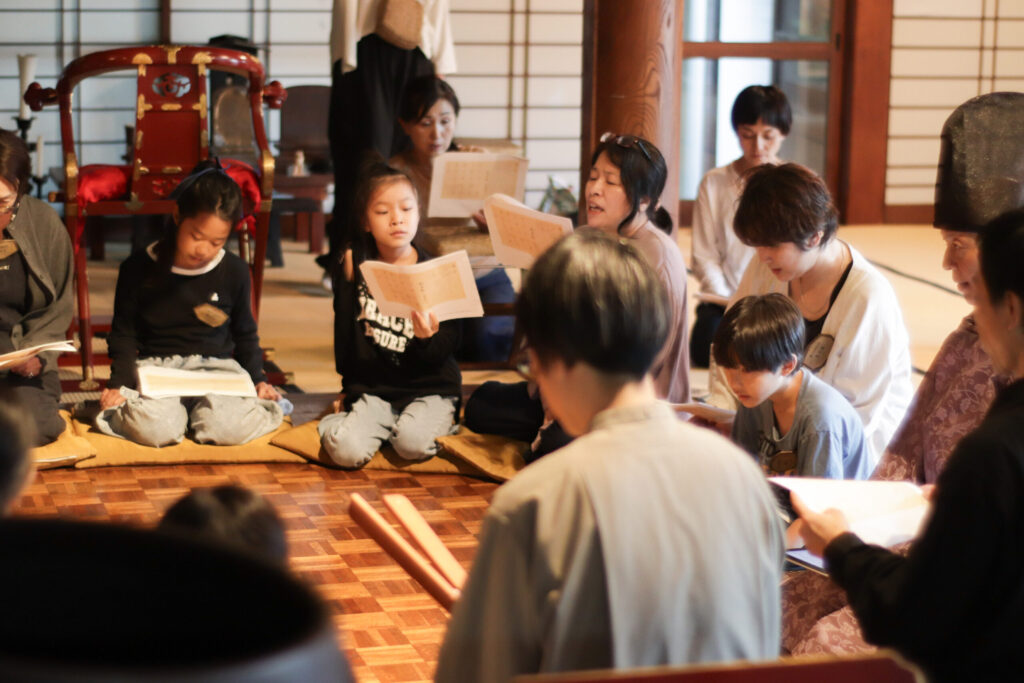
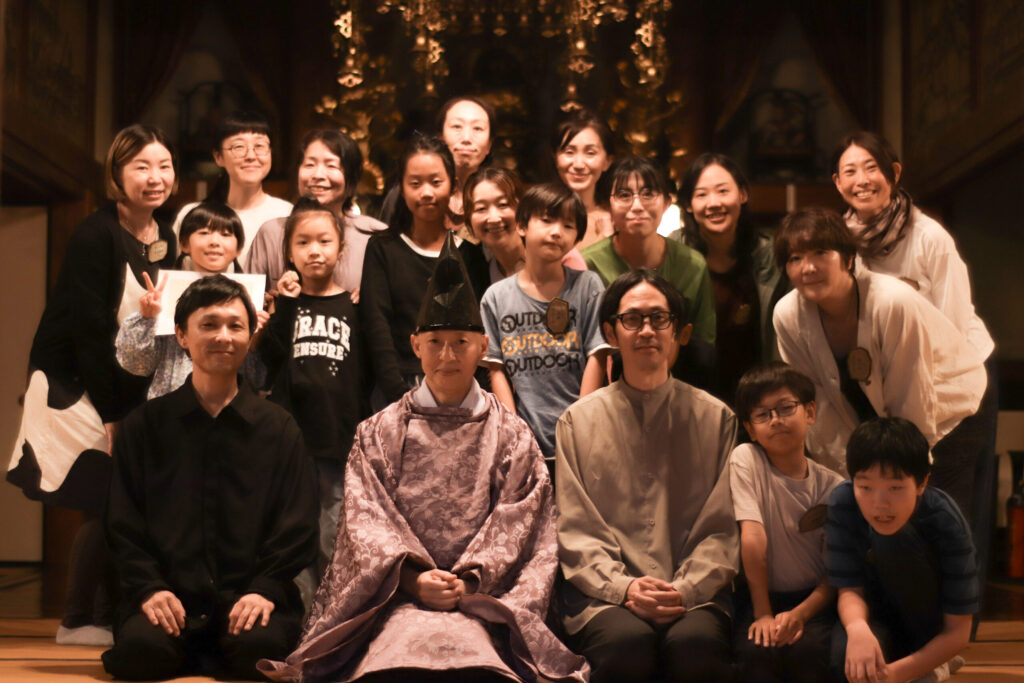
The experience took place at Ryōdenji Temple (簗田寺) in Machida, Tokyo. I had been invited to lead a session on Japanese music as part of a family learning project called 500 Years School, attended by seven parent–child groups.
Rather than giving the children only a lecture about musical history, I wanted them to encounter music directly, with as few instructions as possible. We invited Kō Ishikawa, a shō performer who works across traditional and contemporary music, to play for us.
He performed part of Banshikichō no Chōshi (盤渉調調子). In Gagaku, Banshikichō names one of the traditional tonal systems, while a chōshi explores the character of a tonal world. This was not a short, conventional song with a readily identifiable chorus. That was precisely why I chose it.
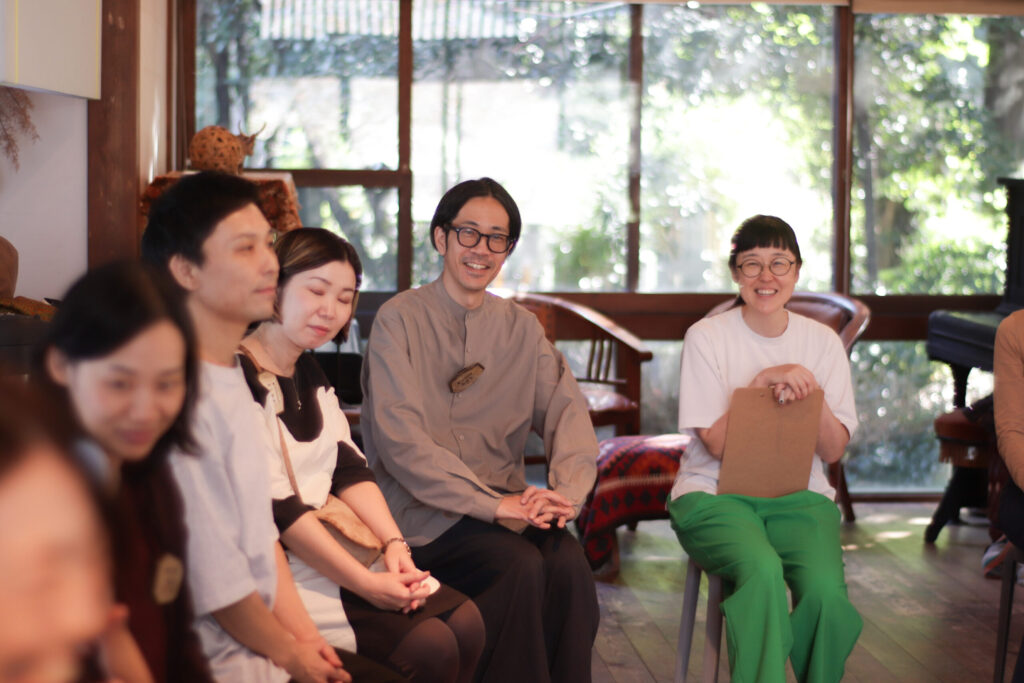
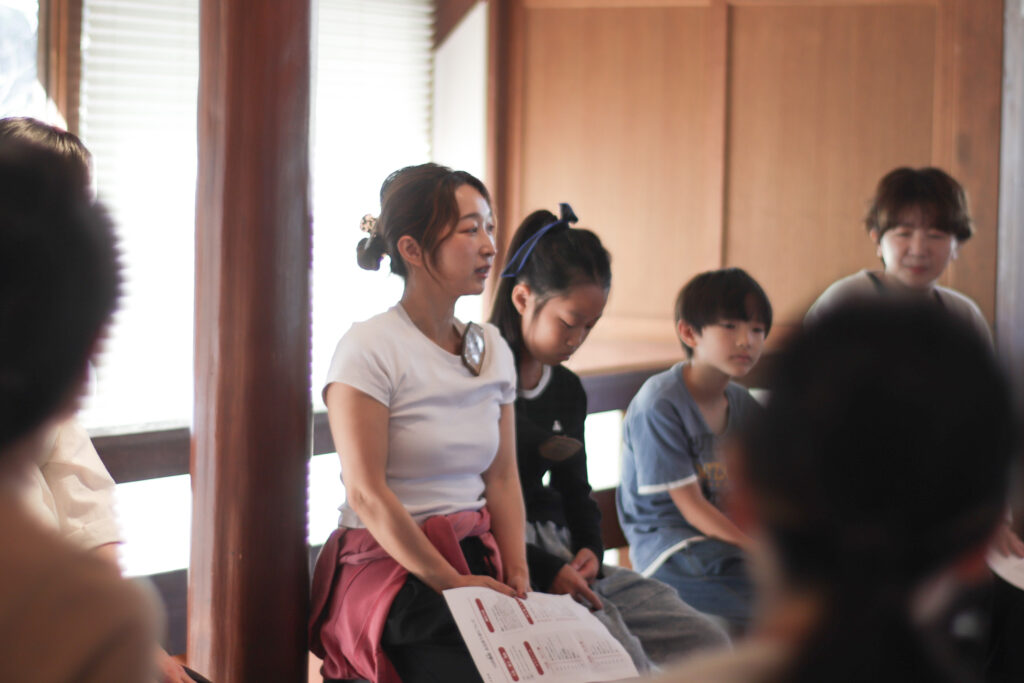
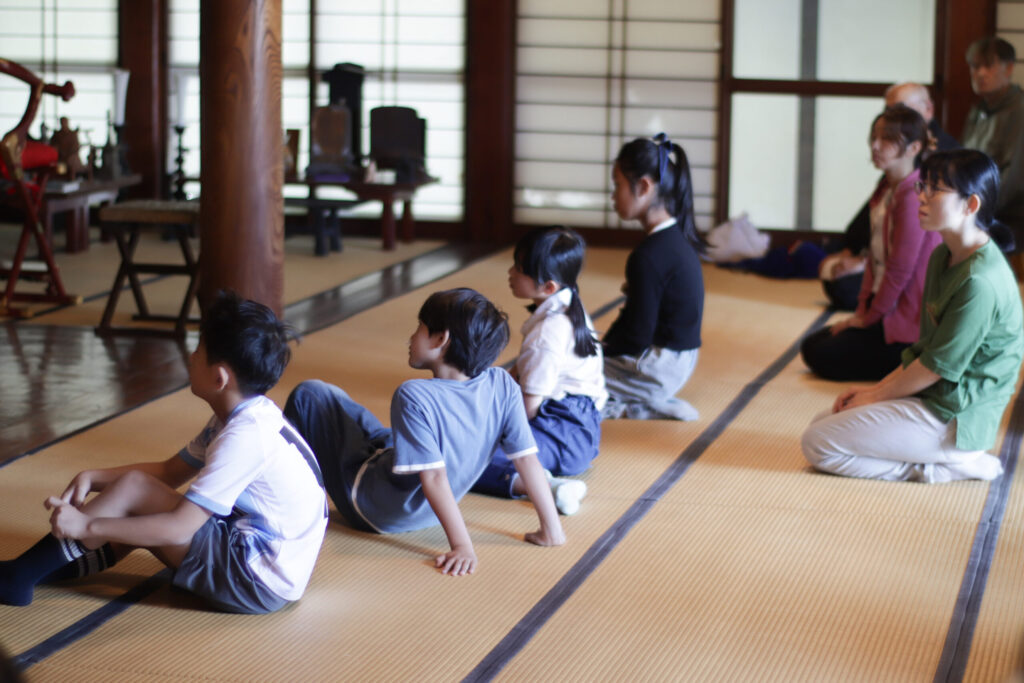
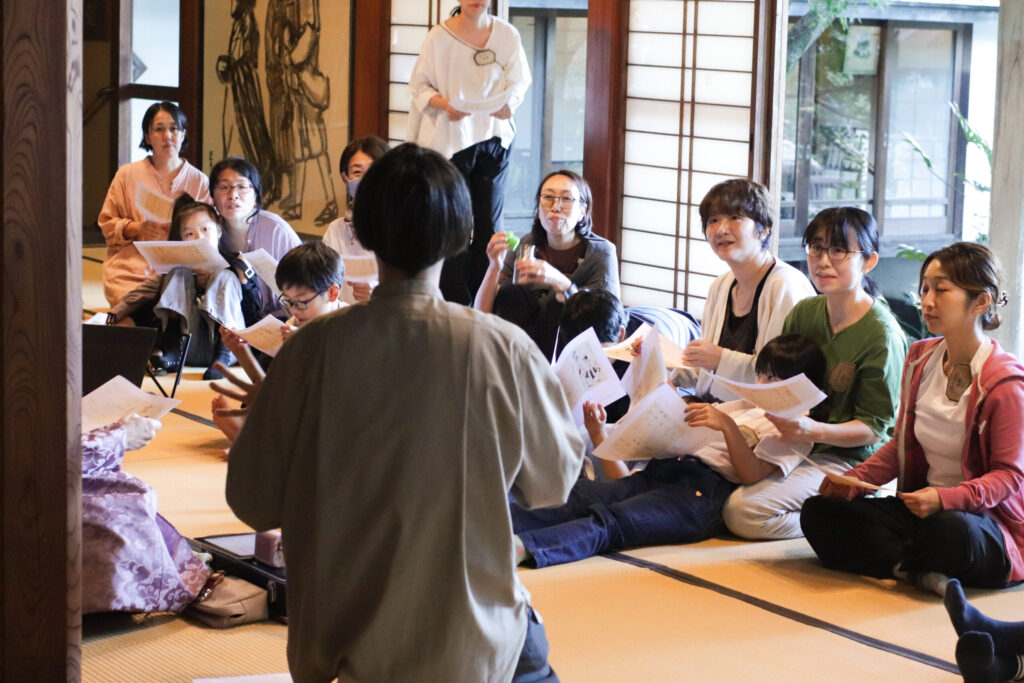
We gave the listeners a simple invitation: you do not have to sit perfectly still or listen in the ‘correct’ way. They were welcome to lie down on the floor, sit, stand, or move gently around the temple hall. There would be no test afterwards.
The performance lasted about fifteen minutes. To some people, a quarter of an hour of unhurried shō music might sound like a very long time. To me, the time passed almost instantly.
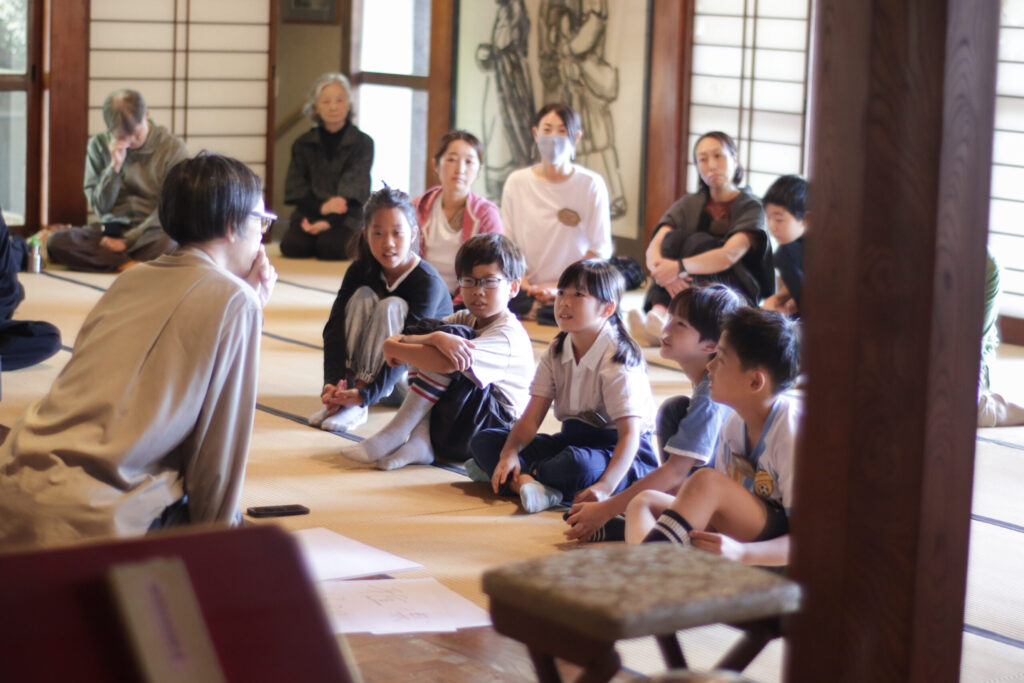
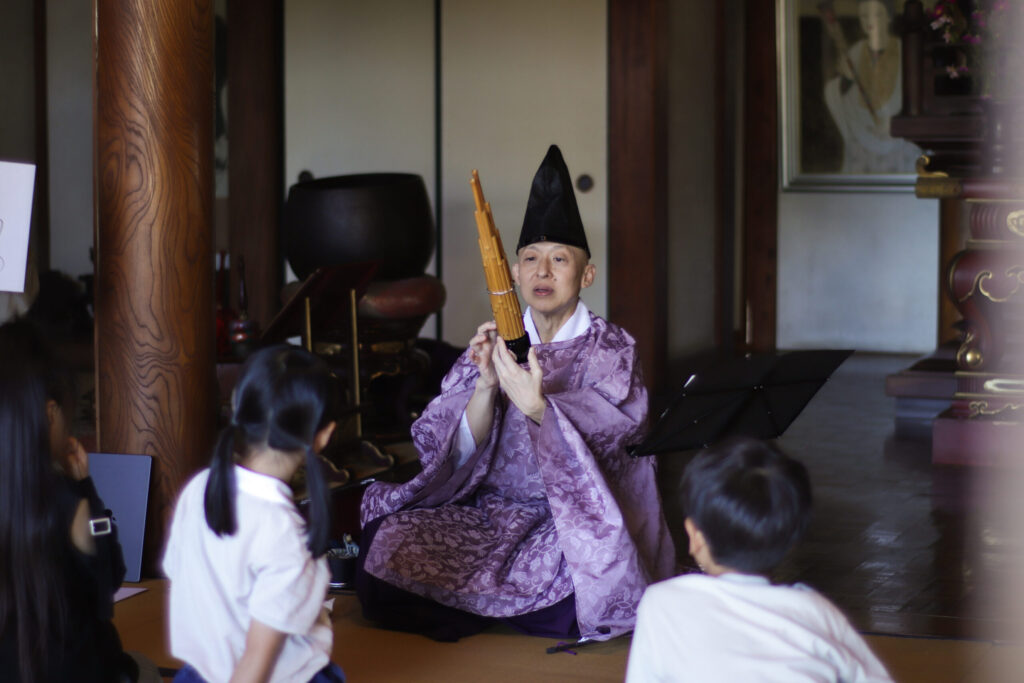
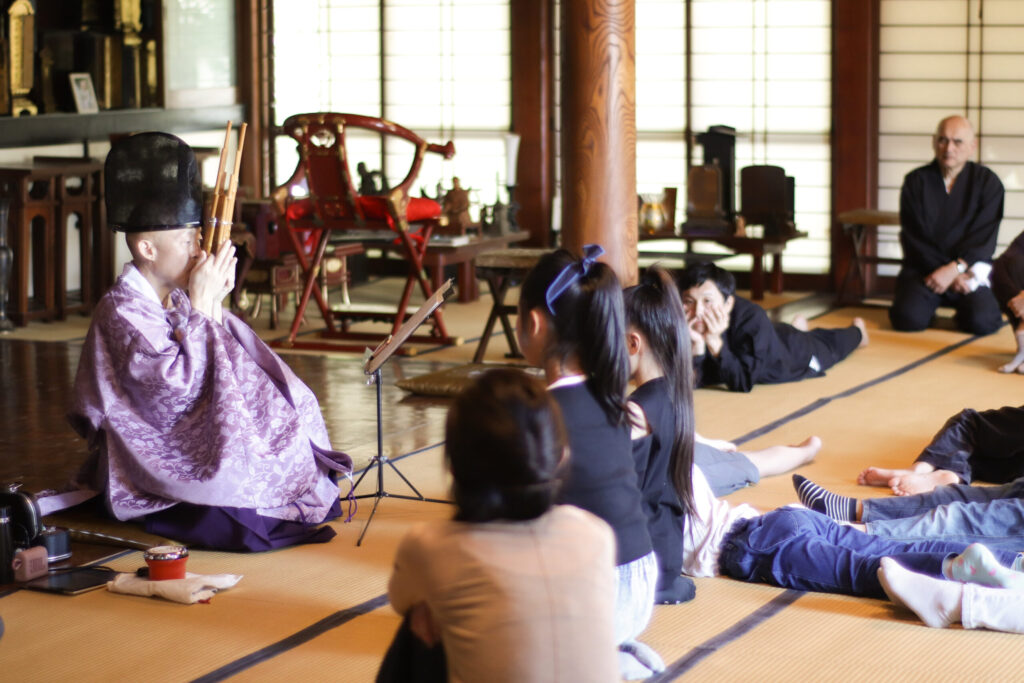
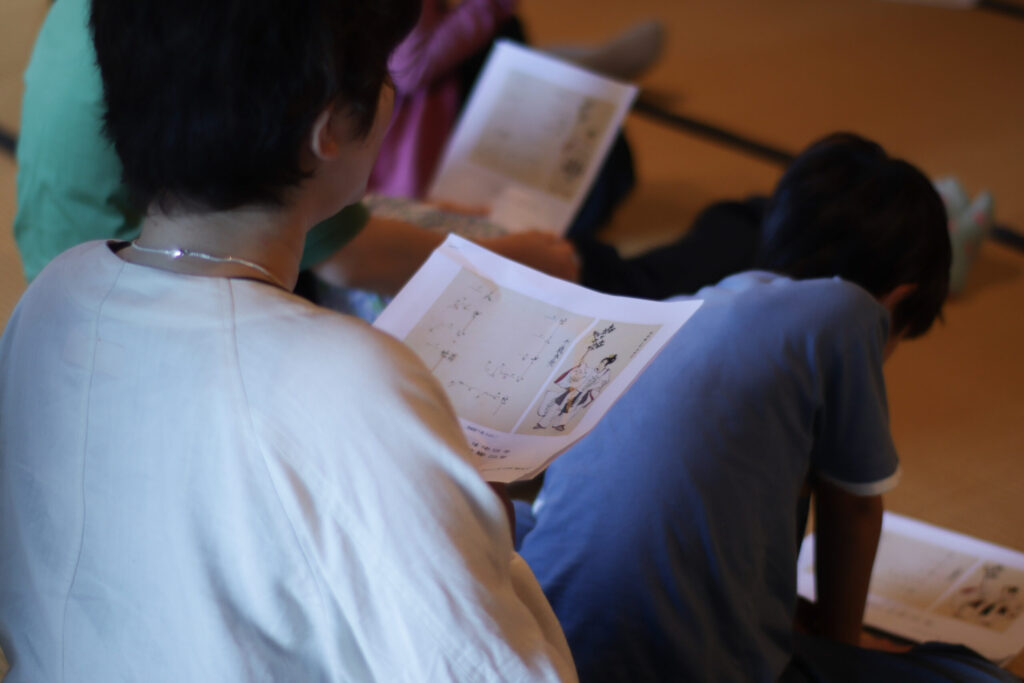
After the music ended, everyone received paper and colored pencils. We asked them to express what they had heard—not by explaining the notes or judging the performance, but by drawing a color, a form, a place, a memory, or a feeling.
The images were astonishingly varied. One person made a soft composition of yellow and red circles. Someone else imagined a large purple sphere. Others drew brown, block-like forms, green and black landscapes, tiny dots, or an image resembling a bright sun. One child said the sound had suggested a bird singing.
These were not slight variations on a shared idea. They seemed to belong to completely different imaginative worlds.
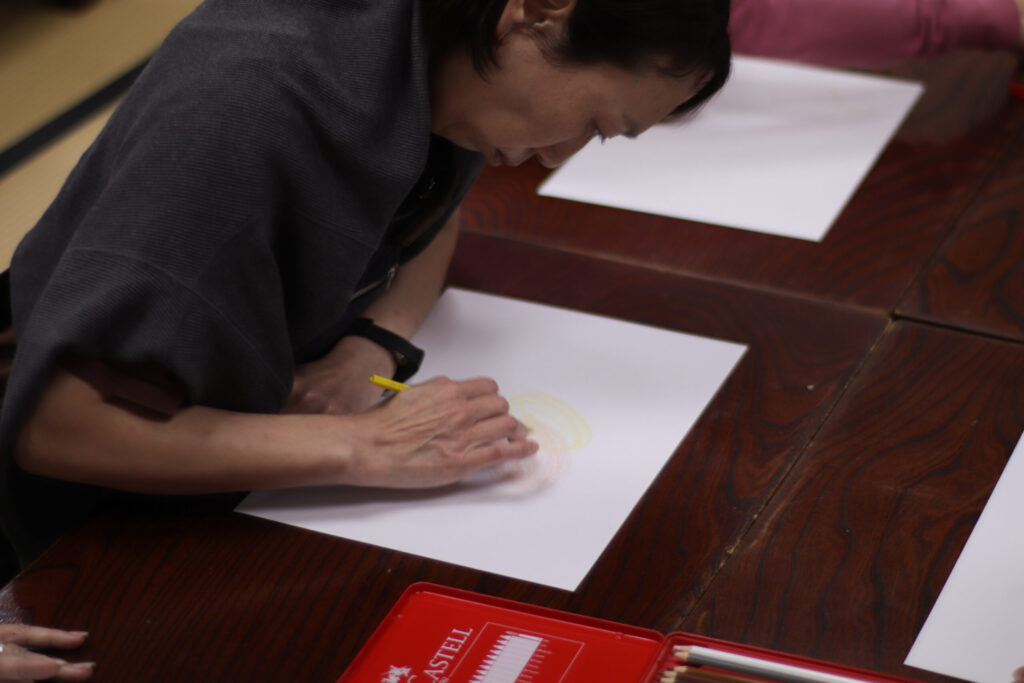
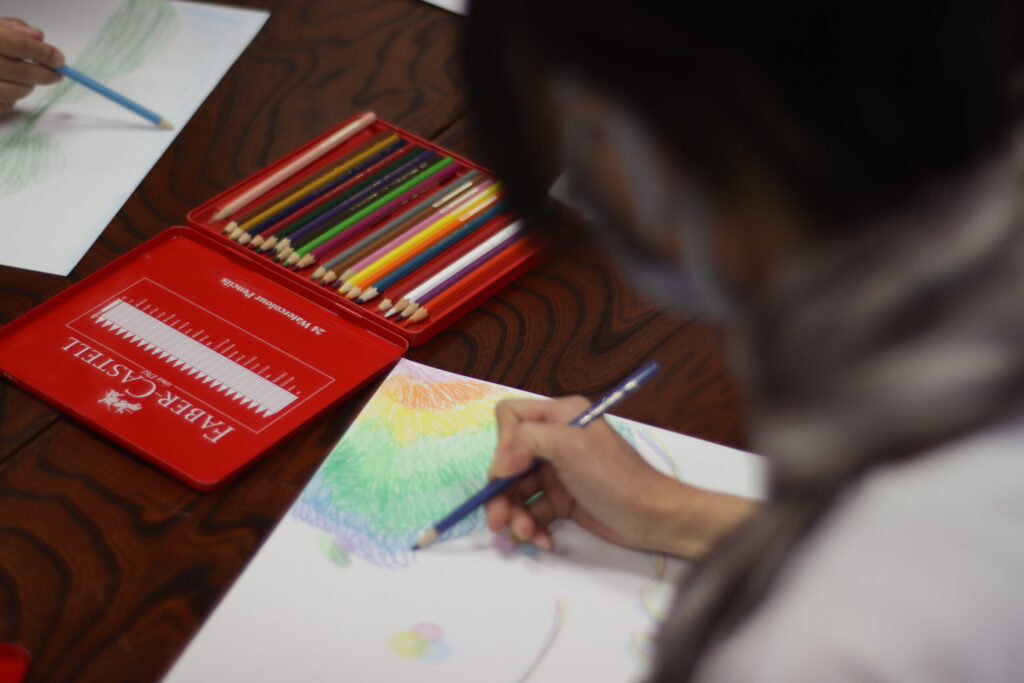
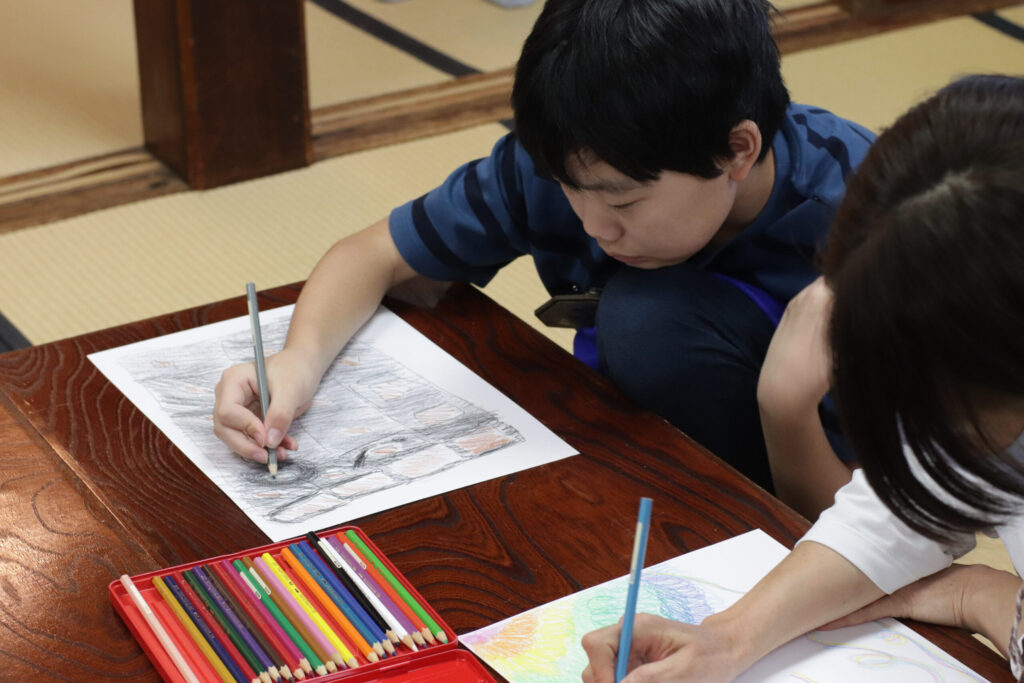
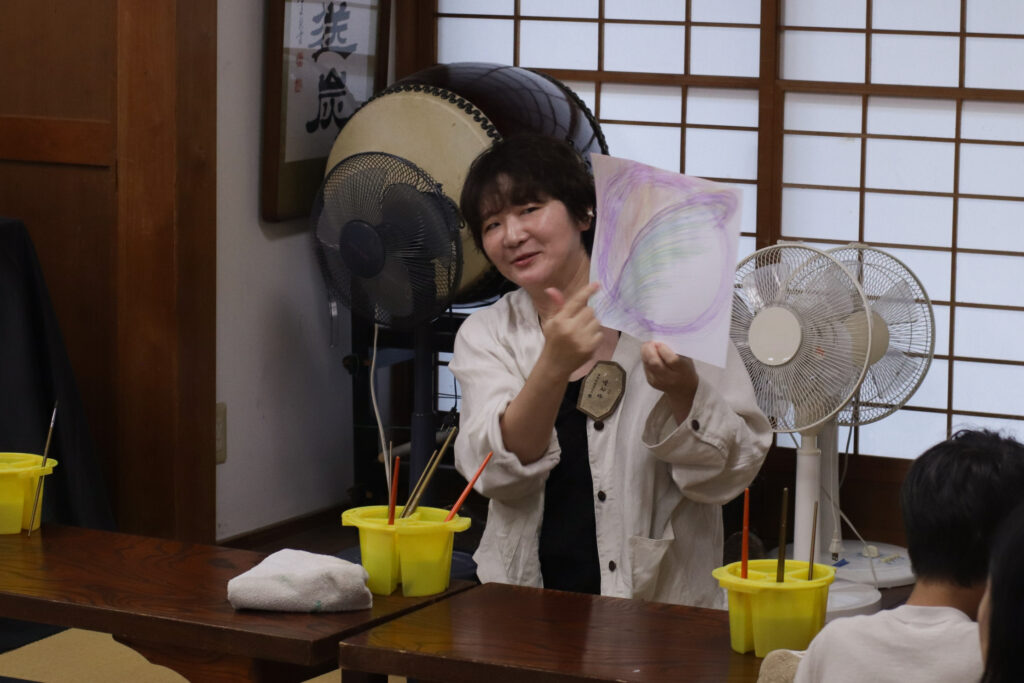
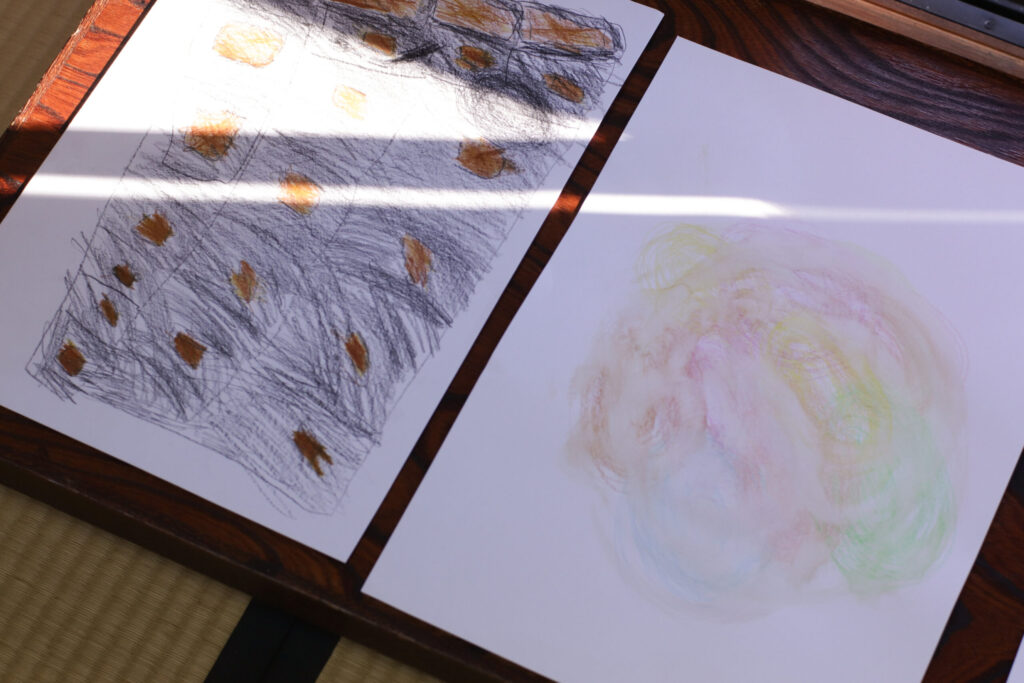
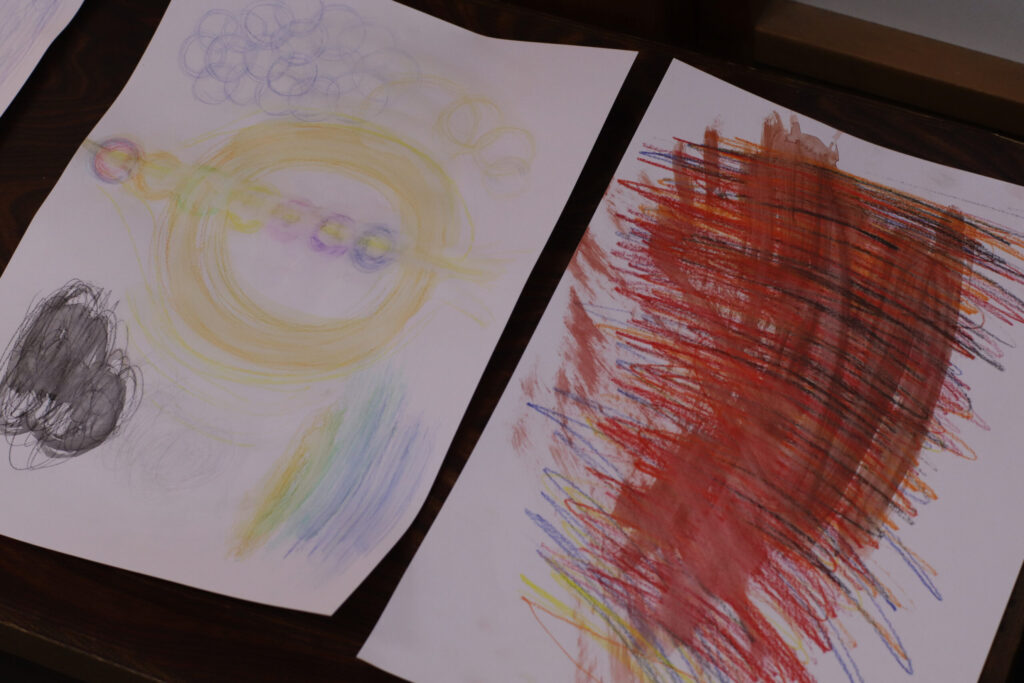
All these people had occupied the same space, at the same moment, listening to the same musician play the same instrument. Yet they had each made something different from the experience. I was fascinated by how little their responses converged.
Of course, this was not a scientific experiment. There were no controls and no attempt to measure perception. It was a modest creative exercise, and I would not claim it proves anything about Gagaku that cannot also be true of other kinds of music.
But as a composer, I found it revealing. A performance may be shared, while the world it gives rise to remains profoundly personal.
We often describe music by its emotional effect: it made us happy, moved us to tears, gave us energy, or filled us with nostalgia. There is nothing wrong with that. Music can communicate emotions with extraordinary power.
But the shō sometimes leads me to another kind of listening. Its sounds do not necessarily seem to be directing us toward a single feeling. Instead, the sound is simply present, and each listener’s attention moves through it in a different way.
I have often wondered whether music might exist for more than the purpose of influencing human emotions. This is my interpretation as a contemporary composer, not a claim about the original historical purpose of every Gagaku composition.
Think of the sound of wind in trees, rain on a roof, or birds calling in the morning. None of these sounds exists to entertain a human listener. Yet one person may find them peaceful, another unsettling, and another full of memory.
Perhaps the shō can sometimes be heard in a similar way: not as a message with a single intended meaning, but as a field of sound in which many different meanings become possible.
This is not a simple contrast between Japanese and Western music. Ambient, experimental, and other musical traditions can also invite open-ended listening. What interests me is the experience itself, and the freedom it offers.
If you have never heard the shō before, I would encourage you to begin without trying to identify the scale, find the melody, or decide whether you like it. Simply listen for a little while. What color comes to mind? What shape? Does the sound bring back a memory, or make you imagine a place you have never been?
There is no correct response. At Ryōdenji, what moved me was not that everyone agreed on the beauty of an ancient instrument. It was that one sound could open so many different doors.
In the video below, I talk about the workshop, the drawings it inspired, and the questions it left me with. There is also an opportunity to hear the shō and try the listening exercise yourself. The video is in Japanese, but the musical experience needs no translation.
Watch “The Mystery of the Shō” on YouTube
If you would like to explore further, you can also read The Living Essence of the Shō and The Shō — Life and Harmony, or visit my YouTube channel for more conversations about music, art, nature, and Japan’s musical traditions.
For readers who prefer the original language, the Japanese version of this article is available here.
