
Gagaku performances and concert planning
From musical offerings at shrines and temples to ceremonies, commemorative events, and performances at cultural venues and schools, composer and music director Taro Ishida and Drifter work with gagaku musicians to plan live performances that reflect the purpose of each occasion.
You do not need to have decided on the repertoire, ensemble or date. Please feel free to start by telling us what you have in mind.
Performance formatsPast projectsPlanning your eventCommon questions
Time to listen closely to classical sounds. Time to discover instruments and compare their voices. Time to encounter new music as different instruments come together. We consider the form of each performance in relation to its audience and purpose.
Listening to the classical repertoire
Hear the sounds woven together by gagaku instruments such as the shō, hichiriki and ryūteki in live performance. For ceremonies, commemorative occasions and concerts at cultural venues, we consider the repertoire and ensemble in relation to the venue and performance length.
There is no need to specify pieces or instruments by name. Tell us about the atmosphere you would like to create and the people you hope will hear the music.
Offering music to a place
For festivals, restoration celebrations and anniversaries. Music performed within a religious rite has a different role and requires different preparation from a dedication concert welcoming worshippers and the local community. We begin by listening to the purpose of the occasion and learning about the forms that have been cherished there.
Learning through listening
Listen to each instrument, then return to the ensemble. Learn about a piece and what to listen for, then hear it again. Moving between performance and conversation, we share the pleasures of the music with people encountering gagaku for the first time.
For arts appreciation programmes organised by schools and local authorities, see our educational programme, Minna no Gagaku.
Encountering new sounds
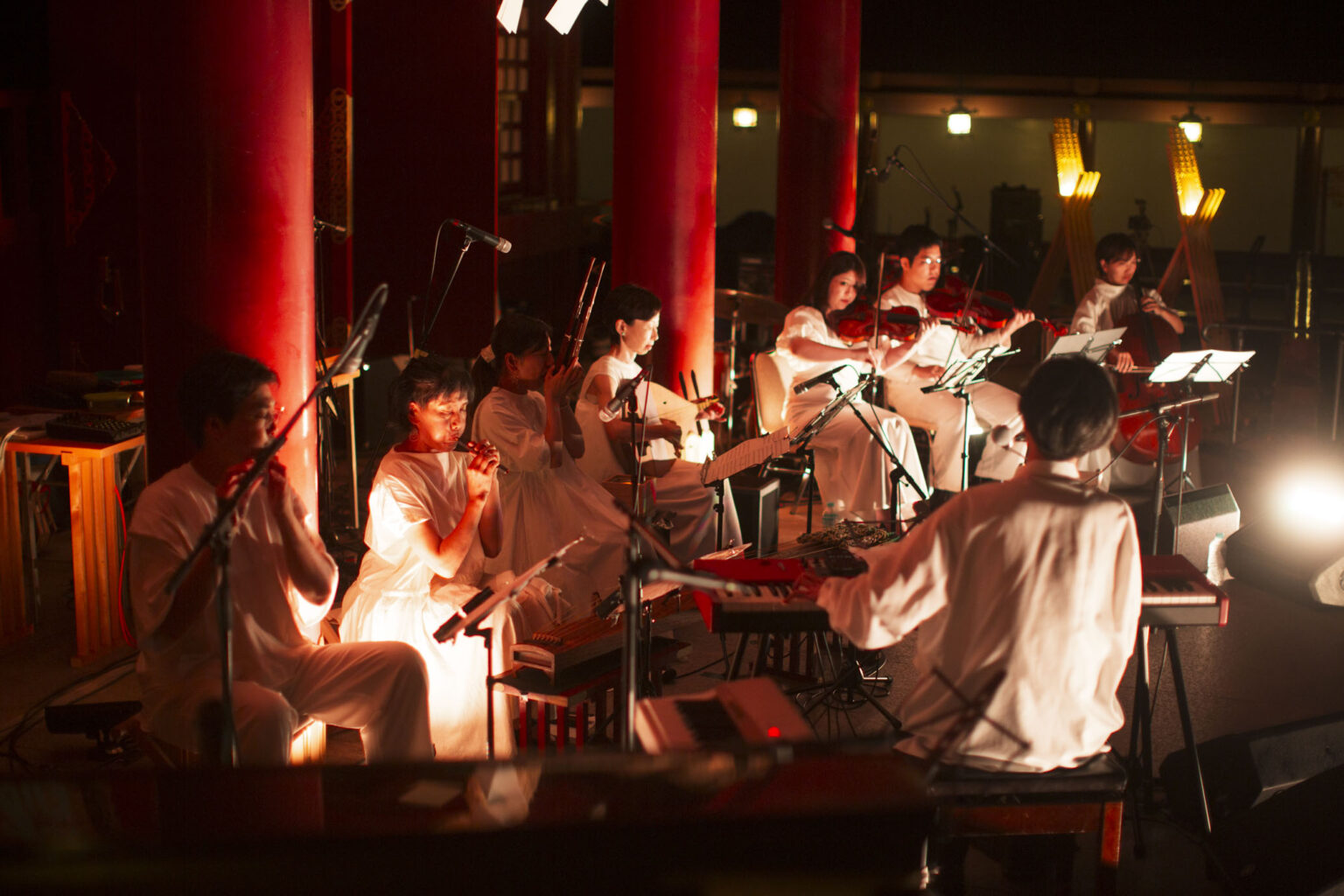
An eight-person ensemble of hichiriki, ryūteki, shō and gakubiwa, together with violin, viola, cello and piano. The repertoire includes works based on classical gagaku and new compositions by Ishida.
Please enquire about presenting this music in a concert hall, cultural venue or festival, in a setting where audiences can listen closely to the works.
Performers, instrumentation, repertoire and duration are considered individually for each project. We can also discuss whether to include bugaku dance or opportunities to try instruments, depending on your wishes and the venue.
This short film presents highlights from a concert for gagaku instruments, strings and piano. Hear the individual colours and the sounds they create together, and see the musicians in performance.
Watch the concert highlights on YouTube / Watch music and conversation from the same concert
The video shows one example of a past performance. The performers and programme for your event will be considered in relation to your request.
The acoustics of the venue, the distance between musicians and listeners, and the point at which music enters an event all matter. Even the same piece can leave a different impression depending on where and how it is heard.
Alongside the repertoire and instruments, Ishida considers the time that people gathering in a place will spend encountering sound. Working through the music with classical gagaku performers, he composes or arranges where needed and shapes the flow of the performance as a whole.
Perhaps you want an occasion for attentive listening, a time that brings the history of a place into focus, or an introduction to Japanese music for a new audience. Planning begins with what matters to you as the organiser.
Shrine festivals, cultural performances in temples, cultural venues overseas, and arts appreciation programmes in schools: we have brought music to each setting in a way that responds to its purpose.

Musical offerings and ritual
At the 2025 concert marking the restoration of the main sanctuary, Ishida appeared as Taro Ishida × TOKOYO and served as music director for the whole event. He shaped the programme with attention to the shrine's acoustics, the order of performances and the words that conveyed the meaning of the offering.
At the annual grand festival the following year, in 2026, four gagaku musicians, three string players and Ishida performed inside the worship hall. Alongside classical gagaku and mikagura, they premiered new music created for the rite.
The concert marking the sanctuary's restoration / The musical offering at the annual festival
Performances shaped by their setting
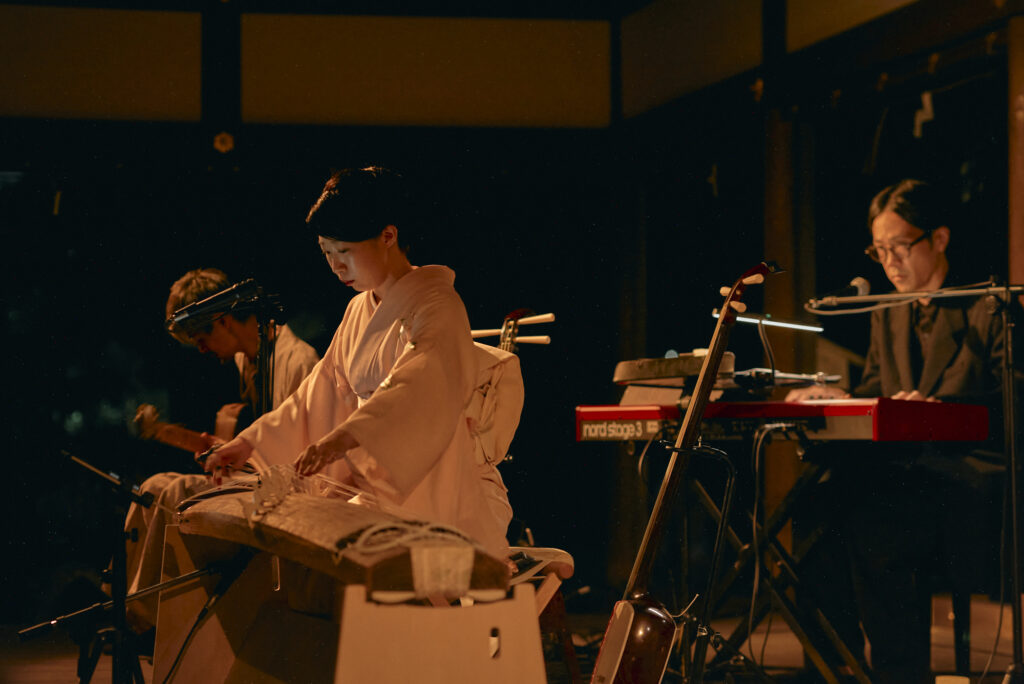
Ishida served as music director and contributed composition and arrangements to AOI, held at the Hashidono pavilion of Kamigamo Shrine.
The programme combined classical gagaku and kagura with new works, taking in the sounds already present at the shrine, including flowing water and the calls of insects.
International events and cultural performances
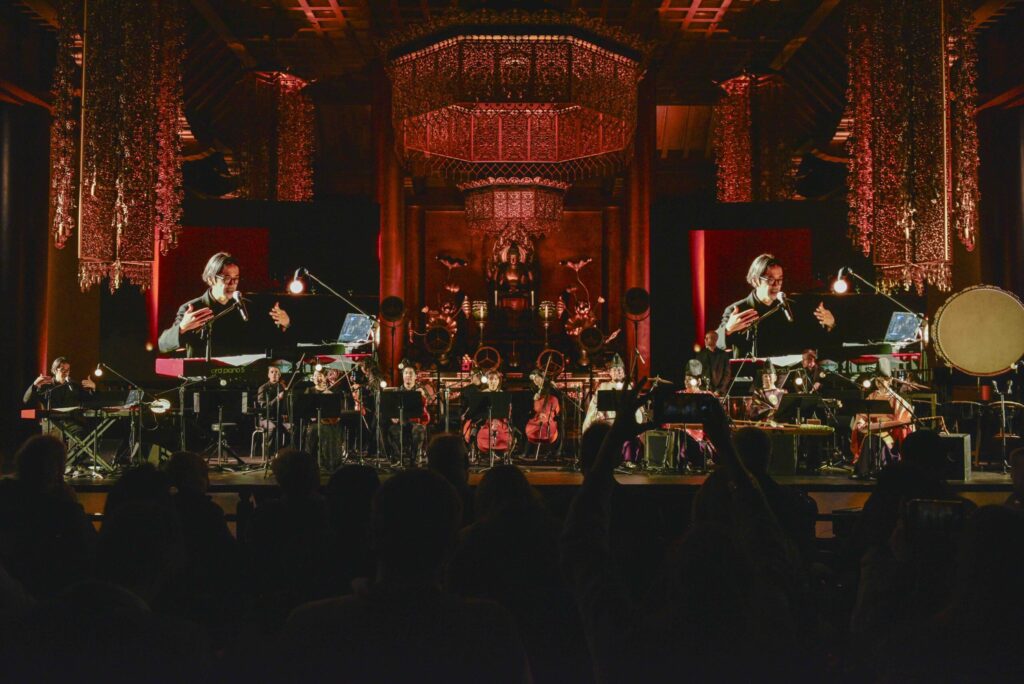
For Kyōmei no Utage, organised by the Nippon Foundation DIVERSITY IN THE ARTS, Ishida worked as music director, composer, arranger and performer. Presented in conjunction with an international conference, the concert brought together classical gagaku, Western instruments, singing and movement.
In Ishida's arrangement of Ryuichi Sakamoto's Merry Christmas, Mr. Lawrence, gagaku musicians performed with an Italian orchestra. He shaped the musical programme as a whole, bringing the different performers together.
Explore the Zōjōji performance / Official highlights video / The organiser's event report
Cultural venues overseas
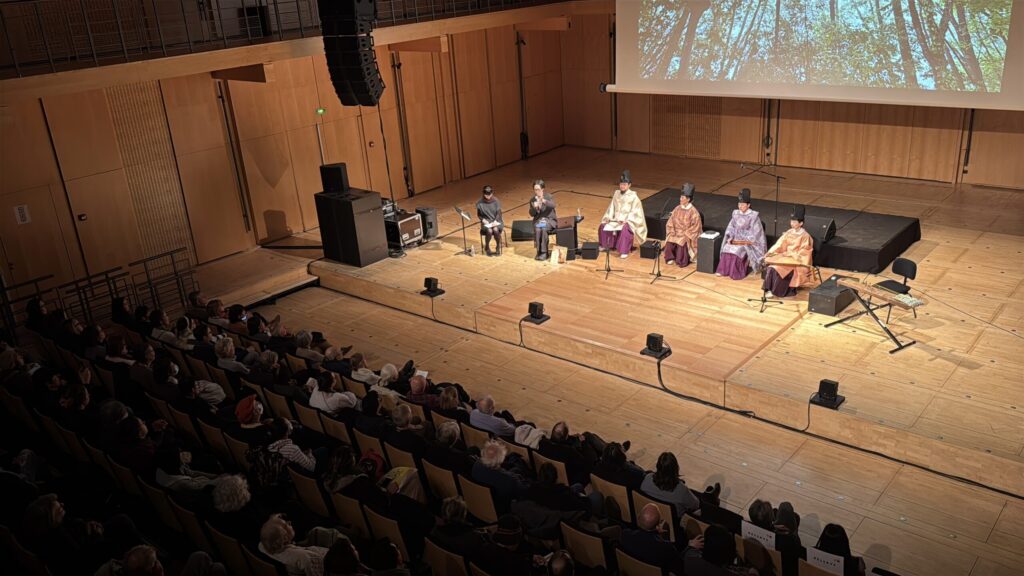
Live demonstrations by four gagaku musicians and explanations by Ishida introduced the instruments' sounds and ways of listening to gagaku. The lecture-concert moved between listening, discussion and a return to performance.
TOKOYO was performed the following day. Together, the programmes offered time to learn about the background of gagaku and time to experience the music as a work in its own right.
Read about the Paris lecture-concert / The host venue's introduction to TOKOYO
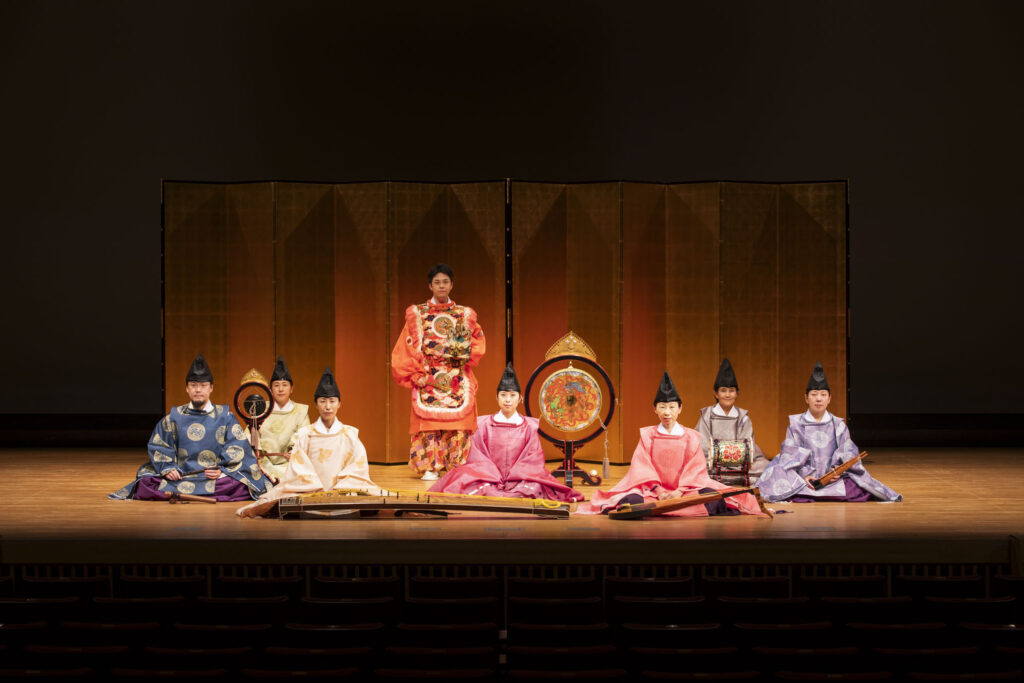
Schools and local authorities
We presented a programme for six primary schools and two junior high schools in Nasu, combining live music, instrument introductions, activities using the voice and body, and a bugaku dance performance.
On this occasion, the programmes lasted approximately 60 minutes for primary pupils and 90 minutes for junior high students. We shape the content around the age groups and educational aims.
Minna no Gagaku: programme and examples / Watch a school performance
A photograph of the venue or an idea for the event can be enough to start a conversation. Before choosing pieces or an ensemble, tell us about the experience you would like to create.
As a composer and music director, Taro Ishida has worked extensively with classical gagaku musicians. He develops the concept, repertoire, instrumentation, compositions, arrangements and flow of a performance, bringing them into form with the musicians and production team.
For Season 1 of the FX/Disney+ drama SHŌGUN, he was responsible for Japanese traditional music arrangements and recording production in Japan. He draws on this experience in concert-making, from conceiving the music to bringing the musicians' sounds into a finished work.
Ishida's role in SHŌGUN / About Taro Ishida and Drifter
The appropriate ensemble and equipment depend on the venue's size and acoustics and the number of listeners. As the programme takes shape, we discuss the following points.
You do not need to have researched everything before contacting us. We will agree on the necessary preparations and responsibilities for your project. At shrines and temples, we also work with respect for the order of the occasion and the conditions for using the venue.
Of course. You do not need to know the names of pieces or instruments. Tell us what kind of occasion you are planning and who you would like to hear the music. We can begin shaping the performance from there.
You can contact us at the planning stage. Simply share what you know, such as the season, location and purpose of the event. Please mark anything that is still open as undecided.
It depends on the programme, ensemble, duration, number of performances, location and venue facilities, among other factors. We first discuss your wishes, clarify what is needed and then provide an individual quotation. If you have an indicative budget, please let us know.
Yes. We consider the instrumentation and performance length in relation to the music you have in mind and the venue. A small ensemble and TOKOYO's eight-person format have different repertoires and sounds, so please start by telling us about your event.
We welcome enquiries about performances in Japan and overseas. We consider the location, timing, venue, travel and accommodation arrangements alongside the musicians' availability. For overseas events, we also discuss how to present the programme, including the language of commentary and interpretation.
We also work on projects involving new compositions and arrangements. These require time for creation as well as performance preparation, so it is helpful to contact us early in the planning process. See also gagaku composition, arrangement and music production.
Please tell us in advance how you would like to record or share the performance, whether for documentation, publicity or streaming. We will make the necessary checks in relation to the performers, venue and music.
Gagaku performance enquiries
“We would like live music at a commemorative event.” “I would love to hear gagaku in this place.” “The details are not decided, but I would like to discuss an idea.” You are welcome to contact us from any of these starting points.
Simply share what you know about the place and timing, the people attending, and what you hope the music will bring to the occasion.
After discussing your ideas and checking the ensemble and venue conditions, we will propose a performance format and provide a quotation.
Some linked reference pages and video audio are in Japanese.
Email enquiries: mail@drftr.co.jp
Languages: 日本語 · English · Français · Deutsch · Español · Italiano · Português · Русский · 한국어 · 简体中文 · 繁體中文 · العربية · हिन्दी
