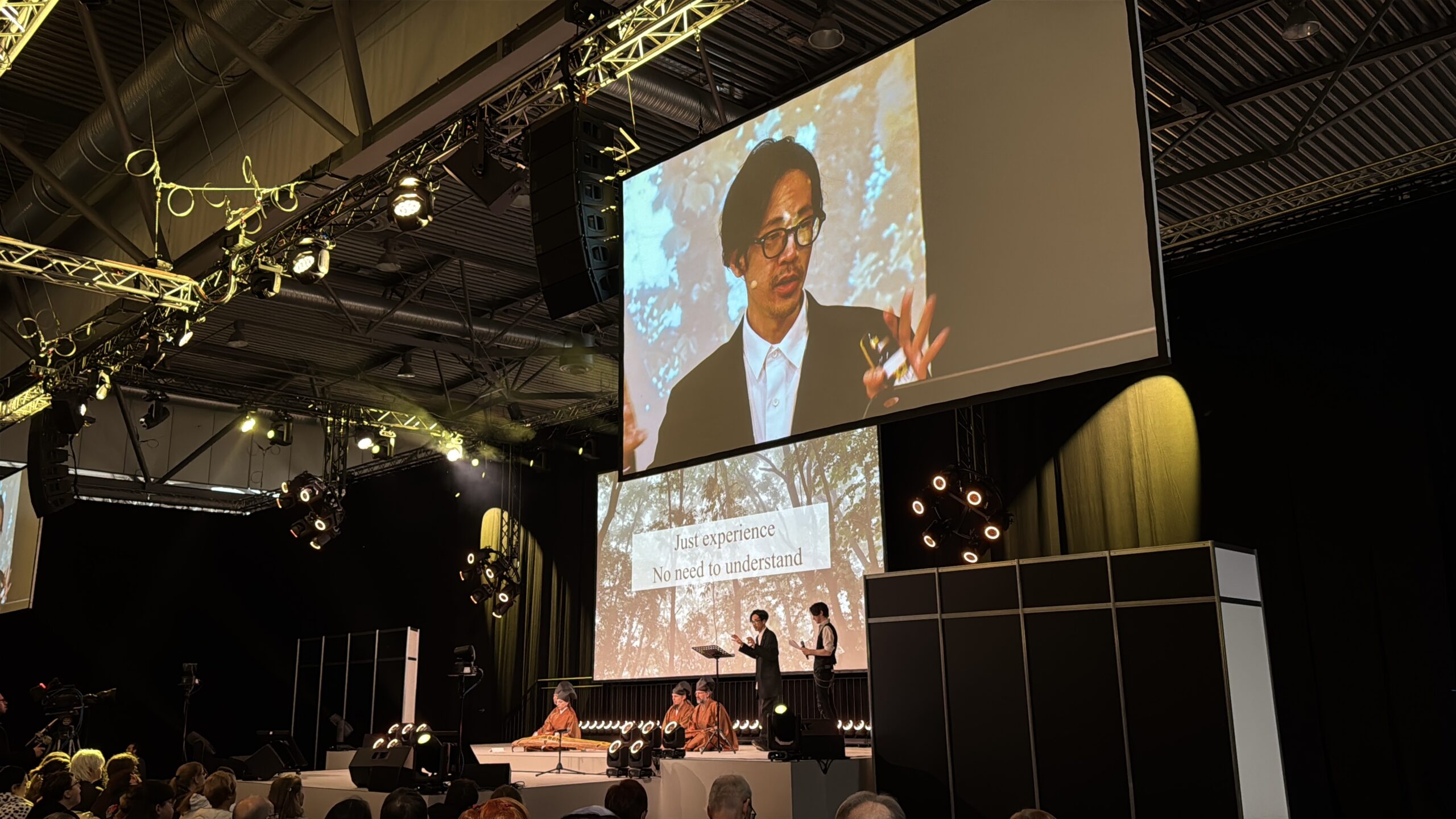
In March 2026, Taro Ishida presented lectures and lecture-concerts in Munich, Cologne and Leipzig. The programmes introduced gagaku, the Japanese court-music tradition, to audiences with different levels of familiarity with Japan, using live sound as the starting point.
How do you introduce music whose pacing and ensemble relationships may be unfamiliar to the audience? Ishida began with the experience of listening, then explored the instruments, their overlapping sounds and the ideas of time and nature that inform his own work.
One invitation was to listen to gagaku as one might listen to birds, wind or a forest: without first trying to assign a single meaning to every sound. This is Ishida’s perspective as a composer, rather than a claim that gagaku has only one historical or philosophical meaning.
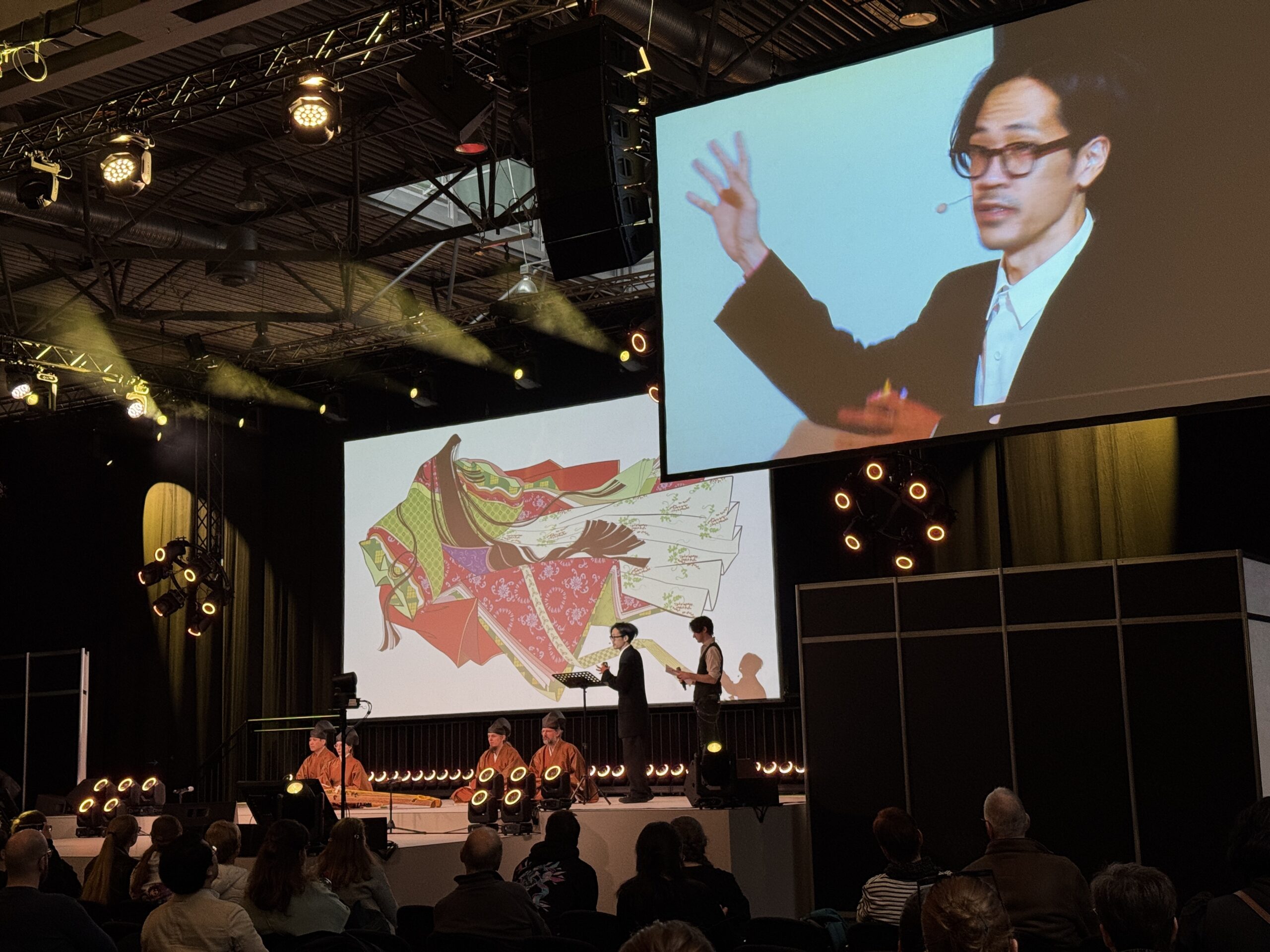
On March 14, the Bavarian German-Japanese Society hosted an approximately 90-minute lecture at Kultur im Trafo. Speaking in English, Ishida used gagaku to explore Japanese ideas of beauty and the relationship between people and nature.
The programme connected musical features with the questions behind them: how a tradition takes shape, what it values and what a contemporary composer can learn from it.
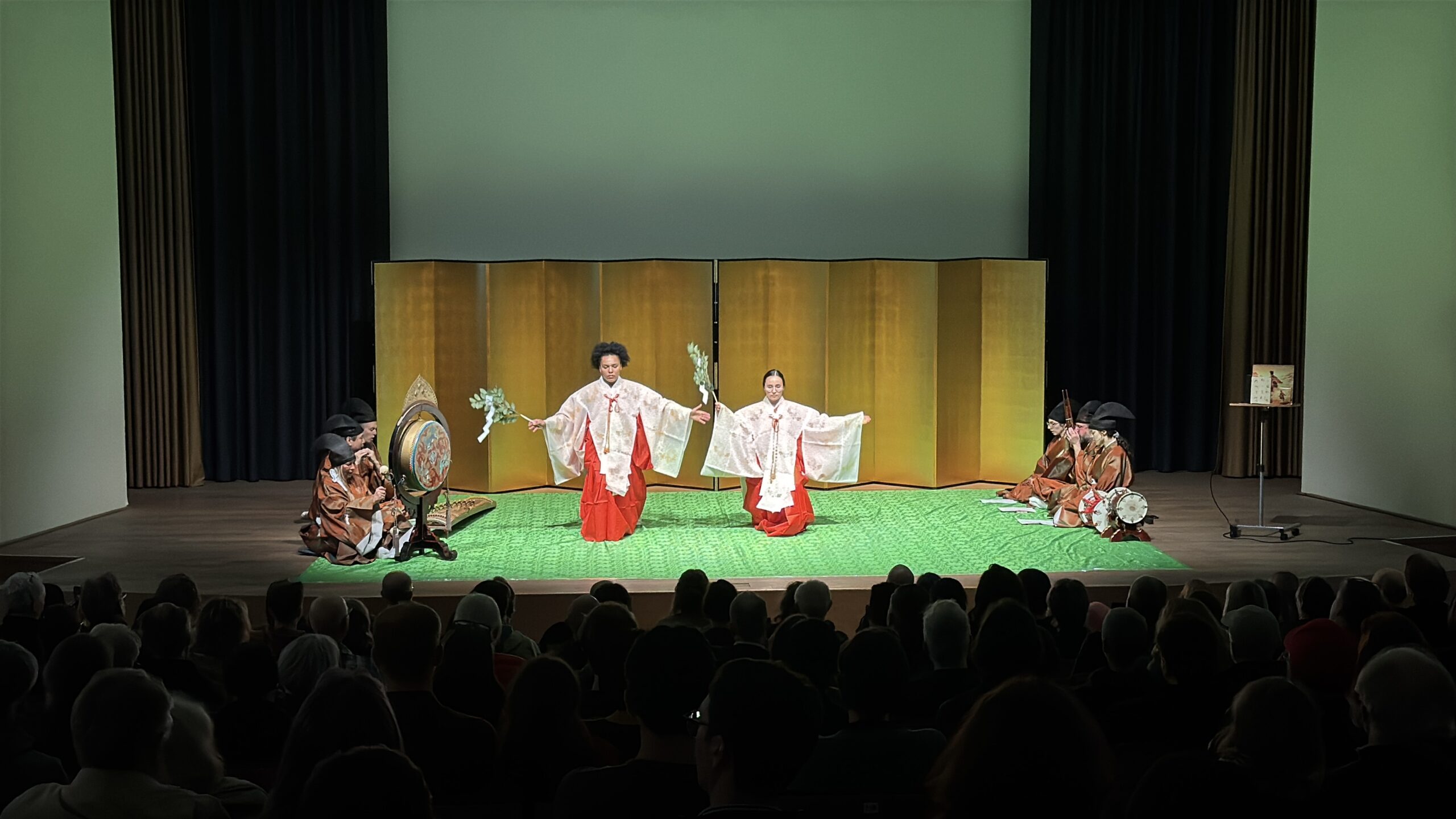
On March 18, Ishida joined the Cologne Gagaku Ensemble at the Japanisches Kulturinstitut Köln, the Japan Foundation’s cultural institute in Cologne. The ensemble first played Etenraku before a detailed explanation, allowing listeners to encounter the music directly.
Discussion and demonstrations then introduced the shō mouth organ, hichiriki reed instrument and ryūteki flute, alongside the way the ensemble’s parts interact. Returning to the music after this introduction offered a way to notice what had changed in one’s listening. Questions and conversation extended the exchange to approximately two and a half hours.
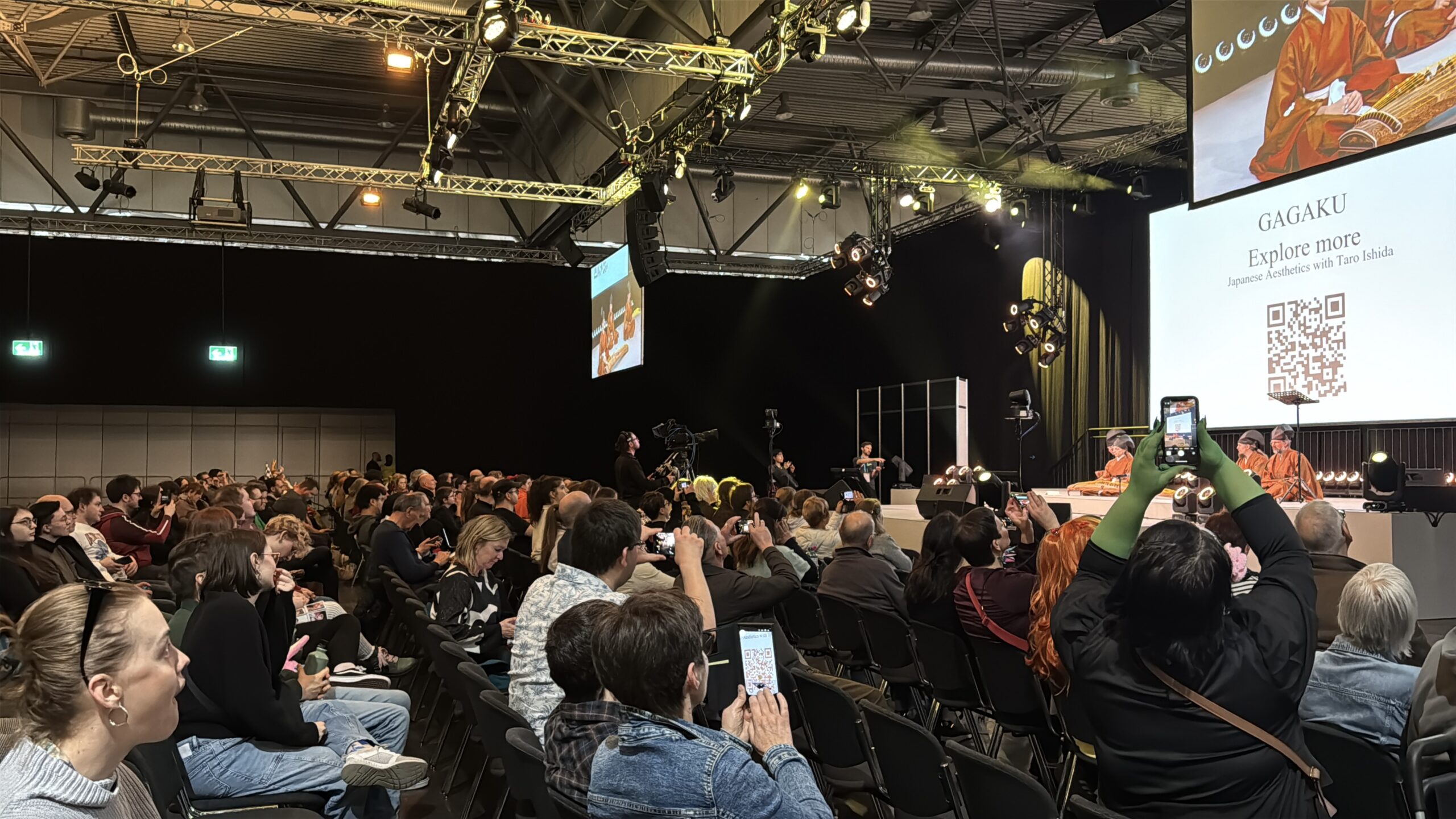
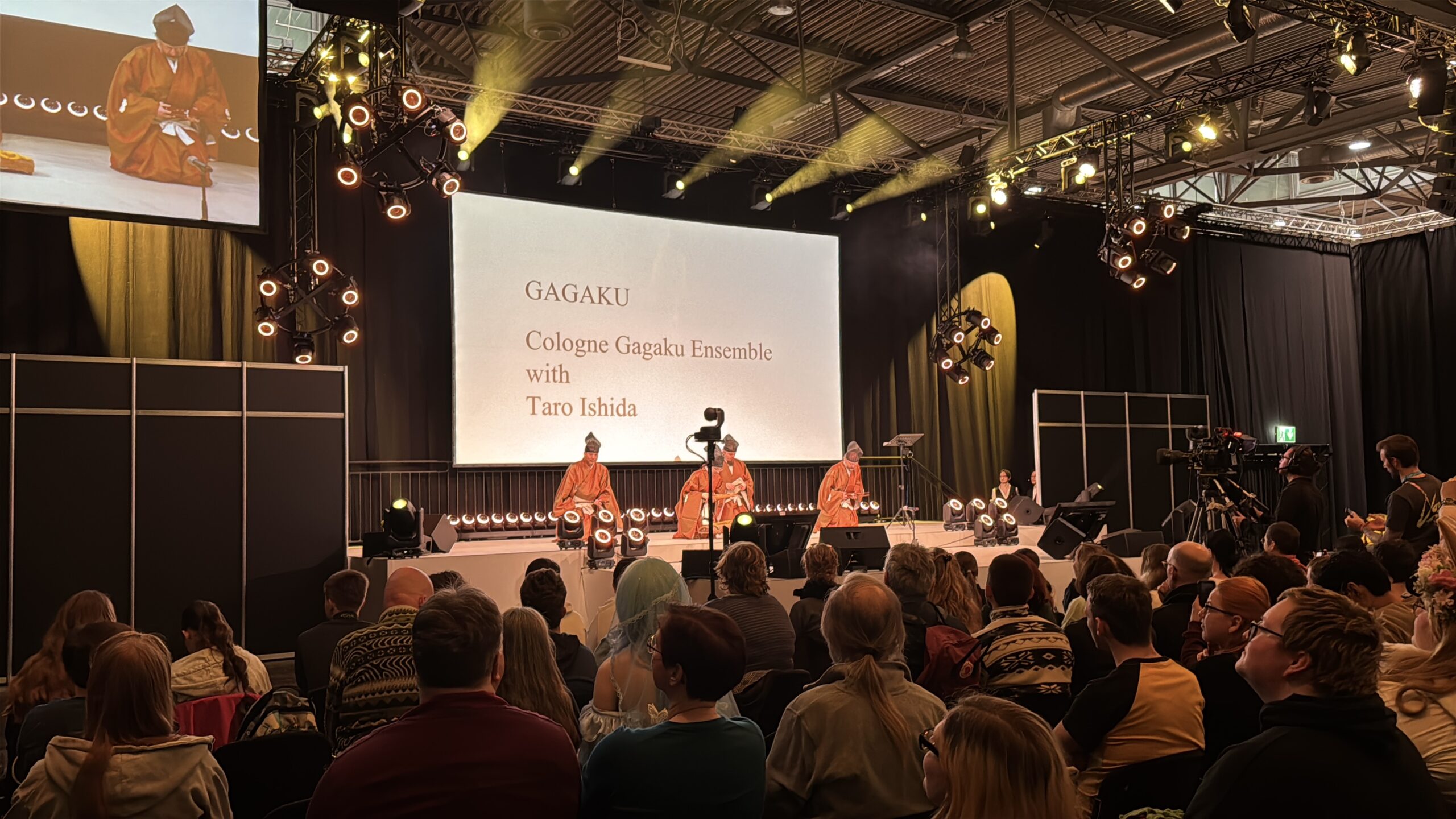
On March 20, Ishida and the Cologne Gagaku Ensemble appeared on the main stage of Manga-Comic-Con, held alongside the Leipzig Book Fair, introducing gagaku to an audience of approximately 800.
The programme was part of a cultural initiative involving the Embassy of Japan in Germany, the Japan Foundation’s institute in Cologne and the Japanese-German Center Berlin. Live performance made it possible to address a broad audience without assuming specialist knowledge.
Discussions after the lectures also changed Ishida’s own perspective. In conversations about older Japanese ideas of nature and spirit, researchers drew comparisons with ideas found in European cultures. These exchanges did not establish a shared historical origin; they opened questions about how different societies have understood the relationship between human life and the natural world.
The three programmes show how a lecture can be adapted to a cultural association, a specialist music presentation or a large public event while keeping the act of listening at its centre.
Cologne programme (German) / Leipzig programme from the Japanese-German Center Berlin (German)
Lectures and musical demonstrations with Taro Ishida