
What changes when we hear an unfamiliar instrument up close? How can a musical tradition become part of a new work? What might listening teach us about time, place and other people?
Composer and music director Taro Ishida develops lectures and demonstrations with Drifter for universities, conservatoires, museums, cultural institutions and schools. Drawing on composition, recording and performance, he connects these questions with actual sounds and the decisions made by musicians.
On this page
For audiences encountering gagaku for the first time, the programme can introduce the sounds and roles of its instruments, the musicians’ ways of learning, and the relationship between individual lines and the ensemble. Live demonstrations, where included, allow participants to connect an explanation with a sound they have just heard.
The aim is to give listeners points of reference: recognising a timbre, following a phrase or noticing a change in the ensemble. No previous knowledge of Japanese music is necessary for an introductory programme.
For composers, performers and arts students, Ishida can discuss the practical work of creating music with instruments whose playing traditions differ from their own. What does a score communicate? What needs to be tried with a performer? When does an instrument suggest a better idea than the one the composer brought to the session?
His work on Shōgun and his own project TOKOYO offer different contexts for these questions. In the first season of Shōgun, he arranged Japanese traditional music and coordinated recording in Japan for the score by Atticus Ross, Leopold Ross and Nick Chuba. In TOKOYO, composition and arrangement develop from his own musical inquiry.
A sustained sound, a silence or a phrase that does not move as we expect can change our attention. Ishida uses listening and examples from his practice to consider how music relates to the environment and to the people sharing it.
His exploration of “Animistic Music” asks how we might understand ourselves within a world of sounding things. This is presented as a composer’s developing perspective, grounded in musical experience. Participants are invited to compare what they hear and to consider how their own habits of listening shape it.
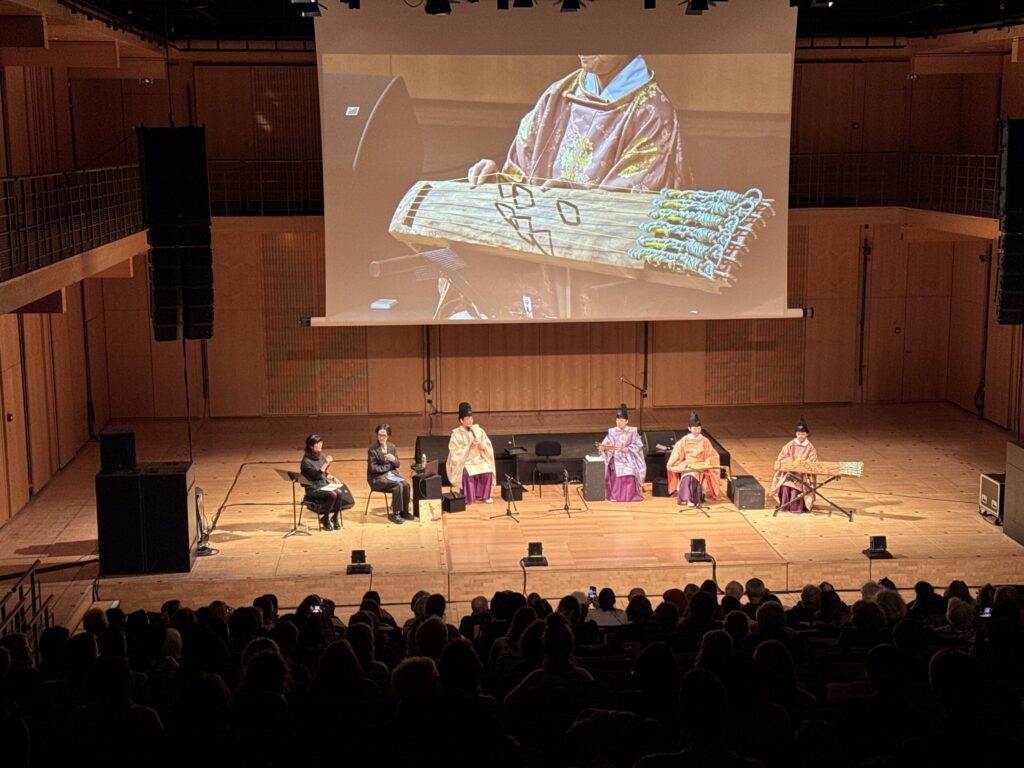
In March 2026, the Maison de la culture du Japon à Paris presented a lecture-demonstration with Ishida and four gagaku musicians. The event introduced the instruments ahead of the following day’s TOKOYO concert. It was presented in Japanese with consecutive interpretation.
During the same tour, Ishida gave a lecture for the Bavarian German-Japanese Society in Munich and joined the Cologne Gagaku Ensemble for a lecture-concert. These projects brought spoken explanation, performance and discussion into different cultural settings.
Paris host’s lecture-demonstration programme (French) · Read about the international tour
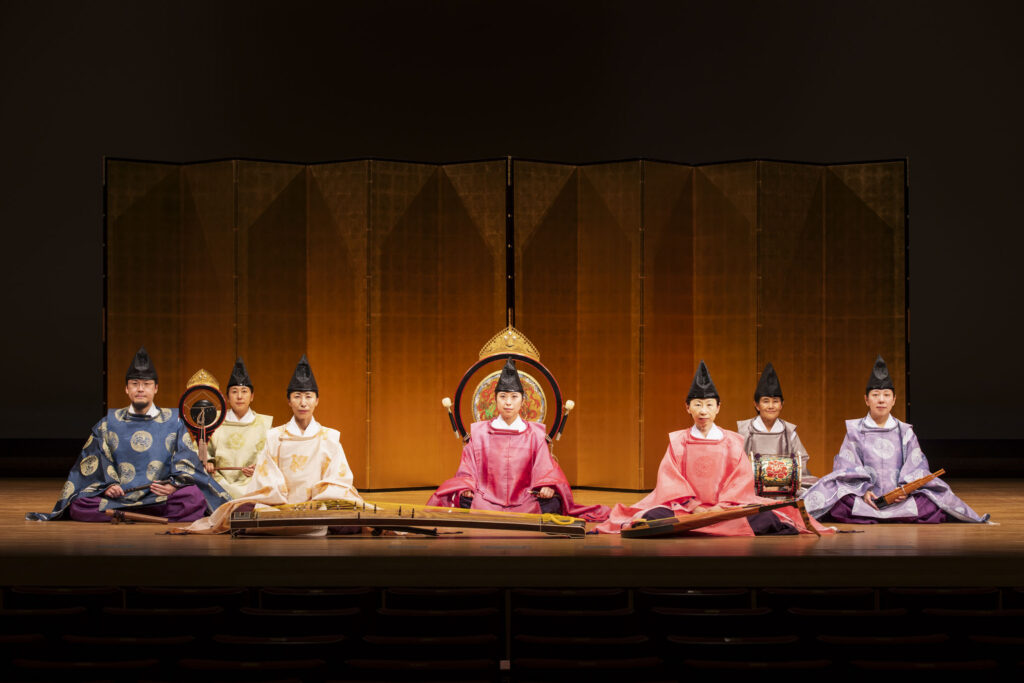
Minna no Gagaku (“Gagaku for Everyone”) is Drifter’s educational programme with specialist gagaku performers. Live music, instrument introductions, singing, percussion activities and bugaku dance can be combined according to the audience and setting.
In June 2026, the programme was presented for pupils from six primary schools and two junior high schools in Nasu, Japan. The primary-school sessions lasted about 60 minutes and the junior-high sessions about 90 minutes. Children sang phrases, followed the musicians’ movements and encountered the instruments through both participation and attentive listening.
For an international school or family programme, we would discuss the age group, educational context, language and available performers before proposing a format. The Japanese programme provides an example of the approach; the content and scale of a new invitation are developed with the host.
See Minna no Gagaku’s programme and photographs (Japanese).
A university lecture can make room for extended discussion of creative practice. A public cultural event may combine a short introduction with live demonstrations. A school programme can include carefully planned participation. The choice depends on what the participants should experience and on the setting.
For a lecture with live musicians, we agree the instruments, performers, rehearsal and venue requirements with you. A lecture-concert or accompanying concert can give listeners a longer encounter with the music.
Please tell us the audience’s language and whether interpretation is available. We agree the speaking language, interpretation format and any translated materials during planning. The Paris event offers one example of working with consecutive interpretation.
Taro Ishida is a composer and music director based in Nasu, Japan. His practice includes gagaku, piano, electronic music, screen music and work for spaces. He became a visiting professor at Kyoto University of the Arts in April 2026, teaching on its distance-learning Music Course. Read his profile.
Send us the details you already have. An outline is enough to start a conversation; you do not need to have every part of the project settled.
Discuss a lecture or educational programme or email mail@drftr.co.jp.
Related: Working with Drifter · Recording & composition · Concerts for presenters
