
In September 2026 I released Shi, a three-track piano recording: two pieces of my own, “Shi” and “Tabi”, followed by Erik Satie’s “Airs à faire fuir No. 2”. I do not think there is a single explanation a listener needs before hearing the music. But I can share why these pieces stayed with me. One grew from the sound of a word, one from a memory I cannot entirely explain, and one simply from my affection for Satie. They are different ways of arriving at the piano.
I began considering the title “Shi” while looking into a possible old word for wind. I am still researching it; I cannot present that etymology as an established linguistic fact. What matters here is the association the sound prompted in me.
In Japanese, the sound shi can also suggest 詩 (poetry) and 死 (death), though these are distinct words. I imagined a breeze touching my cheek and, in that moment, becoming conscious of being alive, of our mortality, and of beauty. This is my own poetic response to a sound, not a claim about what every Japanese word secretly means.
I have spent many years creating music alongside performers of gagaku, Japan’s traditional court music. Yet I do not see my role as simply writing something that resembles the classical repertoire by following its patterns.
What interests me is taking what I have learned—the way time moves, how individual sounds relate, the act of listening to a single resonance—and testing it in other music. “Shi” does not try to imitate the sound of gagaku on a piano. It comes from what remained in me after spending time with that music.
“Tabi” began as a short passage for a planetarium film soundtrack I wrote years ago. During that project, I read a news report about a child who had died after a storm. I knew nothing about the child. Still, while composing, I experienced the unusual feeling that the child was close to me. That was a private impression, not something I could claim as a fact about the child.
The passage accompanied an ordinary transition between images. I had not written elaborate harmonies or imagined it would become important. Yet afterward, when the sky cleared following heavy rain, I found myself playing it. I cannot say whether I was remembering, mourning or praying. The habit simply remained.
I later played it at a concert in Tochigi, where I live, and at subsequent performances. Before playing in Paris, when I was nervous, the same music helped me steady myself. At some point, the piece I had played while thinking of someone else became a piece I relied upon. Music does not always keep the meaning it had when it was written.
The final track is “Airs à faire fuir No. 2” from Erik Satie’s Pièces froides. I love Satie, and if someone asks why I chose this particular piece, the nearest answer is simply, “It felt right.”
Some music carries memories that are difficult to put into words. Sometimes I play a piece because I want to. I rather like having these different impulses side by side.
I tried recording on a grand piano, but the result did not feel quite right. In the end I used the Nord Stage 3 digital piano in my home studio. Yoshihisa Omata mixed the recording, while Shu Fukushima created its design and photography.
September 18, 2026 — digital release
Piano & Recording: Taro Ishida / Mix: Yoshihisa Omata / Design & Photography: Shu Fukushima
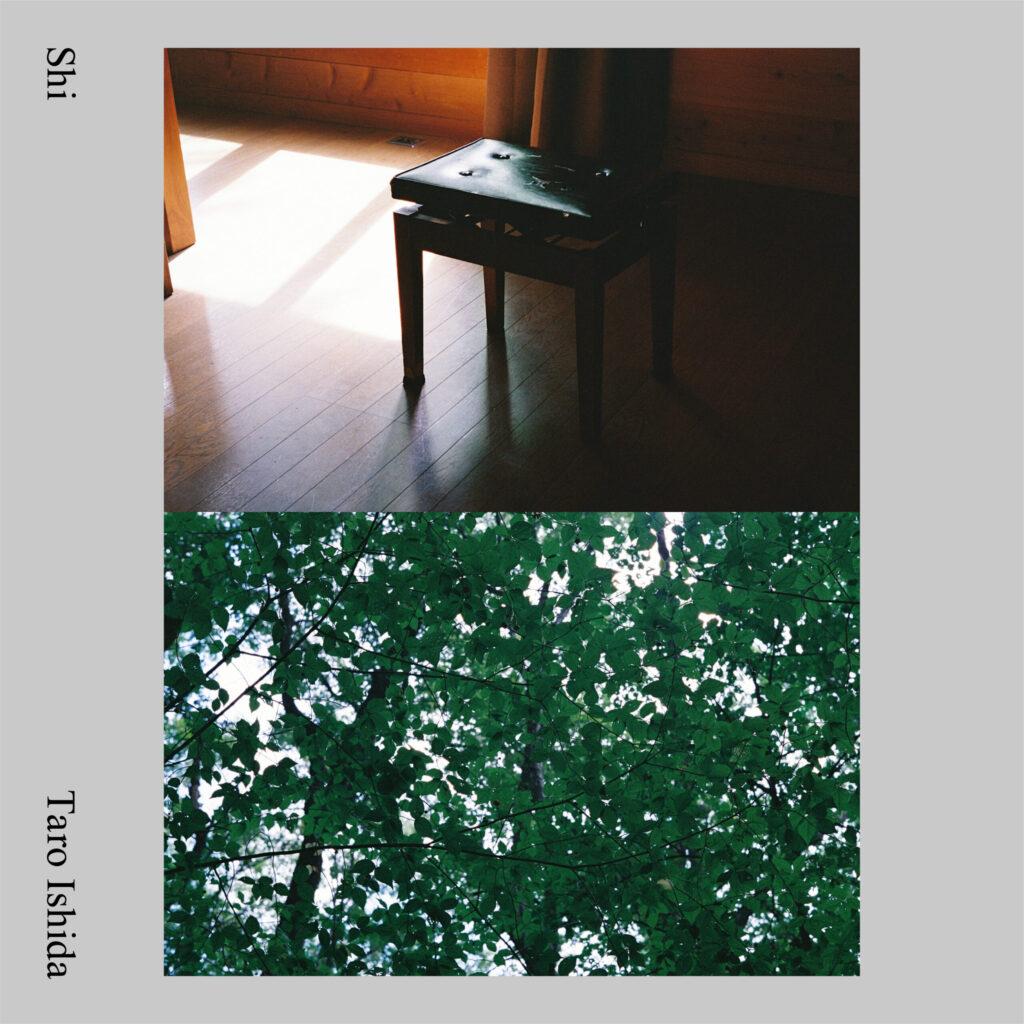
Hear all three tracks through the official Shi release page.
The three tracks were born for different reasons, but they share something: a sound can gather meanings, and those meanings can change every time we return to it. Rather than letting my explanations decide what you hear, I hope you will start with whichever piece draws you in.
Read in other languages: 日本語 · Français · Deutsch · Español · Italiano · Português · Русский · 한국어 · 简体中文 · 繁體中文 · العربية · हिन्दी
