
What happens when Japanese gagaku meets a rock band—not merely as a new instrumental colour, but as a different way of organizing sound and time? On 22 May 2026 at the KAIMoN Music Festival in Tokyo, ROTH BART BARON performed with four gagaku musicians. I worked with the band as music director and arranger. We explored a shared musical language without asking either tradition to surrender what makes it distinctive. Here is how that collaboration came together, with photographs, a live performance and a conversation with the band’s frontman.
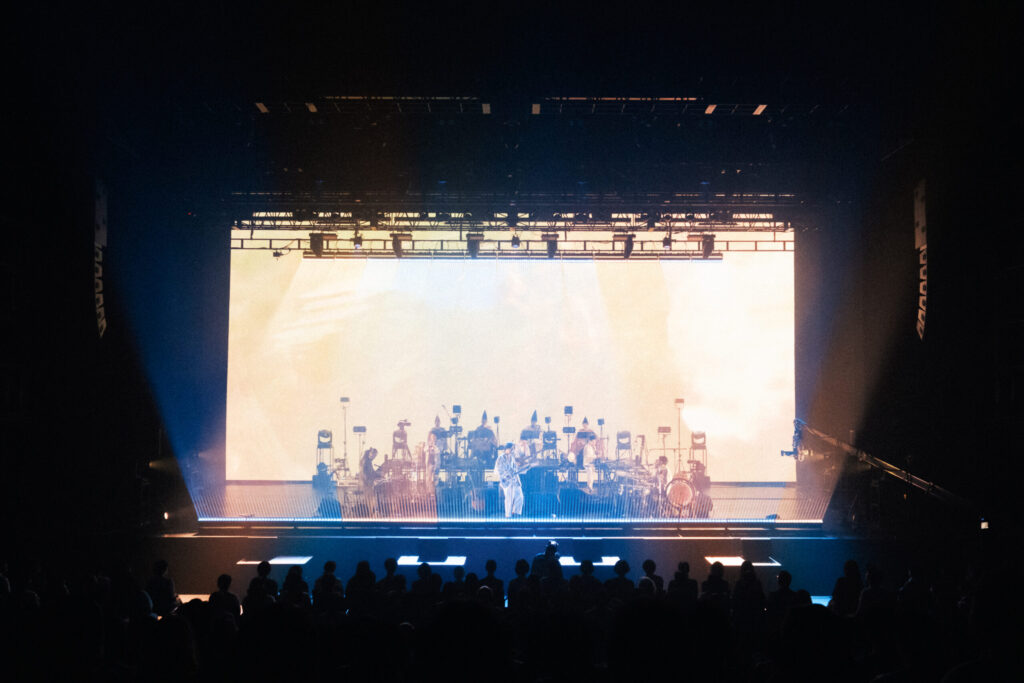
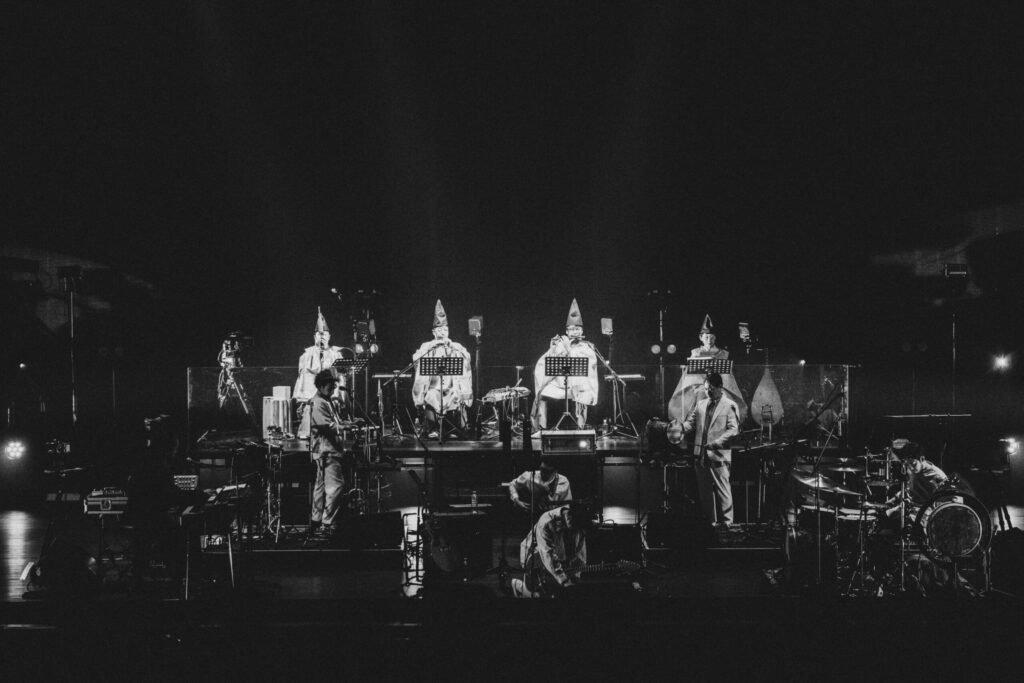
Gagaku is a collective name for several traditions of music and dance transmitted in Japan over many centuries, particularly through the imperial court. Its instruments include the shō, a bamboo mouth organ producing clusters of sustained tones; the hichiriki, a small double-reed instrument with a penetrating voice; the ryūteki, a transverse bamboo flute; and the gaku-biwa, a short-necked lute.
There is nothing wrong with giving a rock song a hichiriki melody or placing shō harmonies behind a singer. Such arrangements can be beautiful. Our question was different: could a rock band encounter not only the sound of gagaku, but also its approach to pulse, breath, pitch, inherited repertoire and the human voice? In other words, could both musical worlds remain fully present?
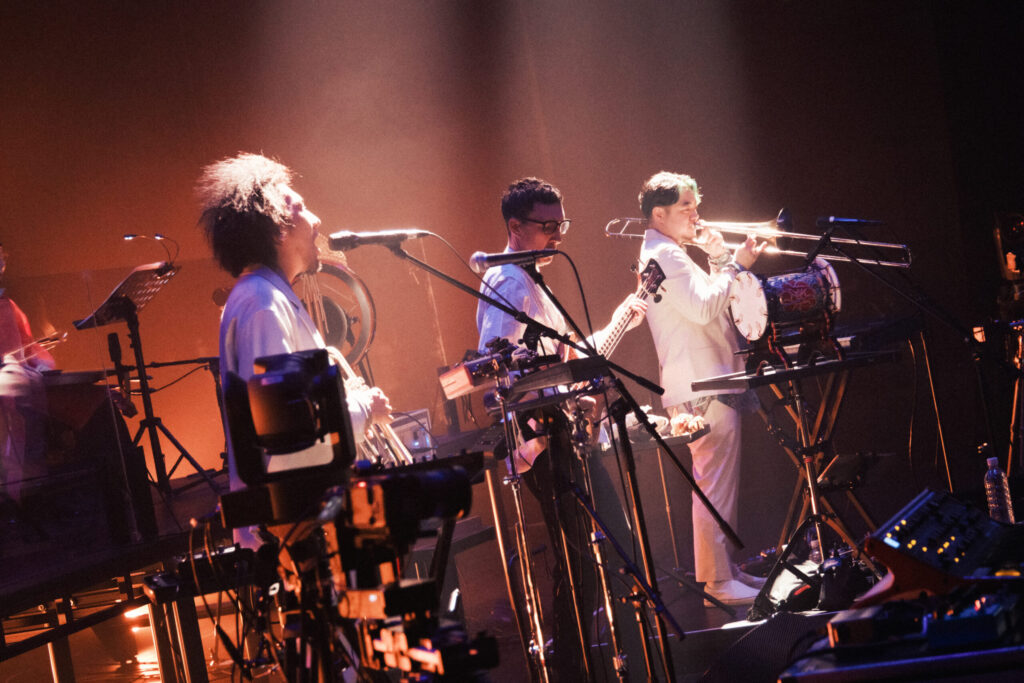
ROTH BART BARON is a Japanese band led by Masaya Mifune, often associated with expansive folk-rock, striking arrangements and a sense of landscape in sound. When I listened to their music closely after the invitation to collaborate, I was immediately excited by the possibilities. Our conversations soon moved beyond the familiar idea of a ‘traditional meets modern’ show.
Mifune spoke thoughtfully about Japan’s living traditions and about music as something that reaches beyond the individual. What made the project possible was the band’s curiosity and respect. Rather than treating gagaku as an exotic effect, its musicians were prepared to rethink the way they played. The NiEW interview with Mifune and me records the thinking that led up to the concert (in Japanese).
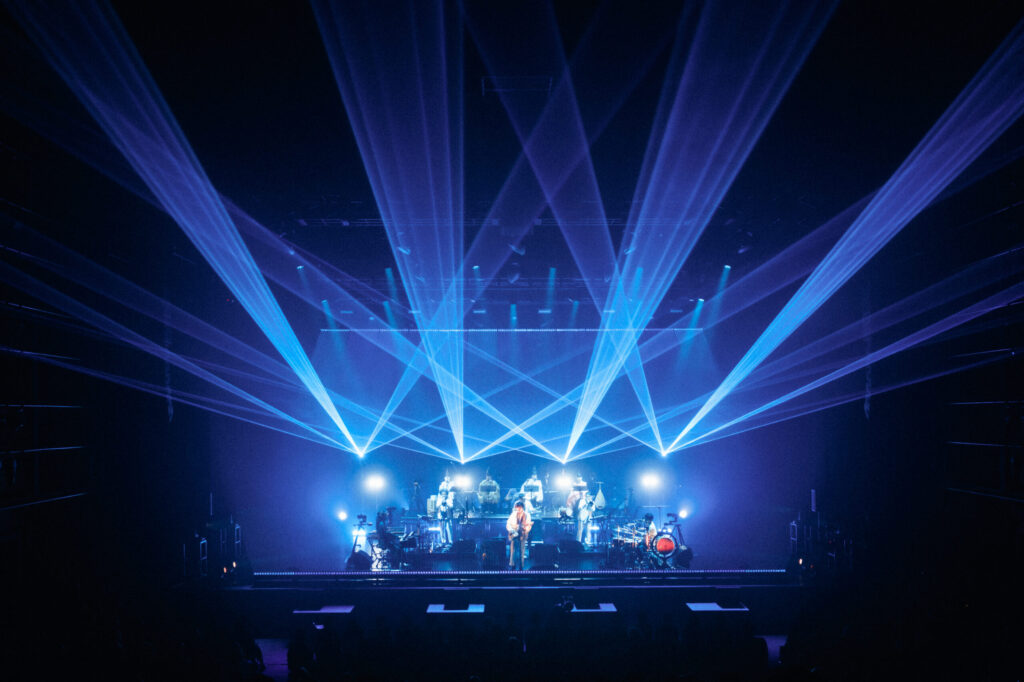
Rock often draws its forward momentum from drums and bass moving together in a regular beat. Gagaku is not simply ‘music without rhythm’: many of its pieces have defined meters and formal rhythmic patterns. Yet the relationship between breath, melodic line, stretched gestures and ensemble timing can make its movement feel radically unlike a tightly synchronized rock groove.
Instead of turning every phrase into a rigid count, we allowed this different experience of time to be heard alongside the band’s pulse. At moments the forces moved together; at others, they seemed to inhabit different layers of the same musical space. That tension was itself part of the composition.
The most practical—and revealing—decision involved pitch. Many modern Western ensembles use A = 440 Hz as a reference. For this particular concert, we chose A = 430 Hz, and the band adapted to that reference, including instruments such as trumpet. That demanded care from musicians accustomed to their usual setup and performance habits.
This was a decision for this performance, not a claim that all historical or contemporary gagaku follows one universal standard of 430 Hz. Nor was the number chosen for a supposed mystical effect. It mattered that the band was willing to meet gagaku on different terms rather than assuming the traditional instruments should always adjust to rock.
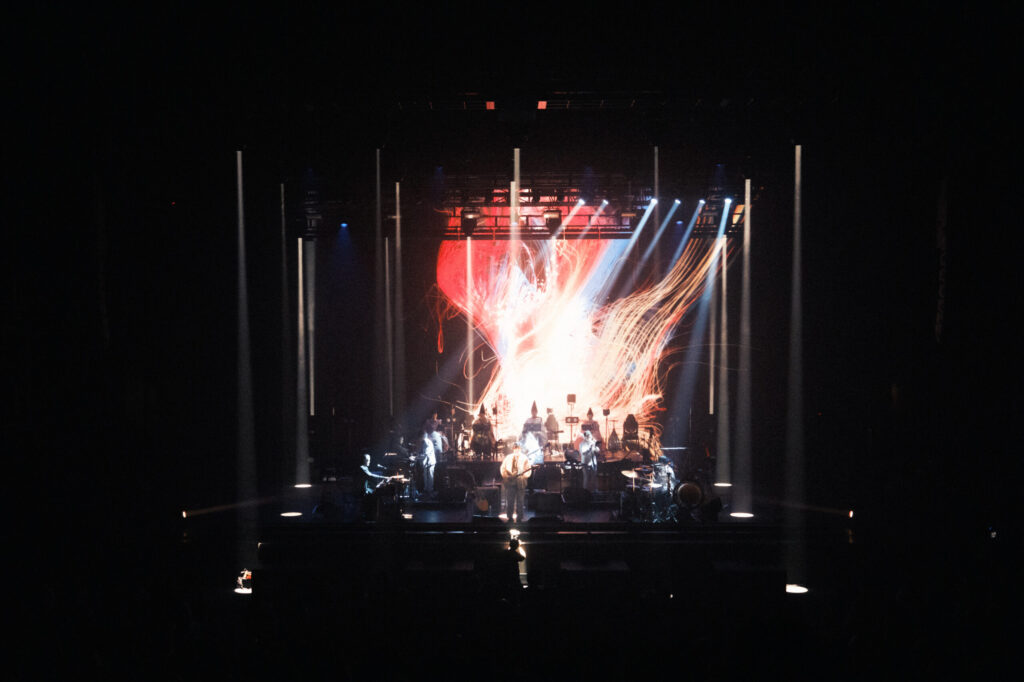
At one point, the four gagaku musicians began with a traditional composition, establishing its own sound world before the band entered. One example used “太食調抜頭(八多良拍子)”, a classical gagaku piece, as the starting point. The official J-WAVE concert report describes the moment when the drums joined the traditional music.
The aim was not to cut fragments out of an old piece and use them merely as samples. We wanted listeners to experience the music on its own terms, then hear what changed when a contemporary band entered the space it had created.
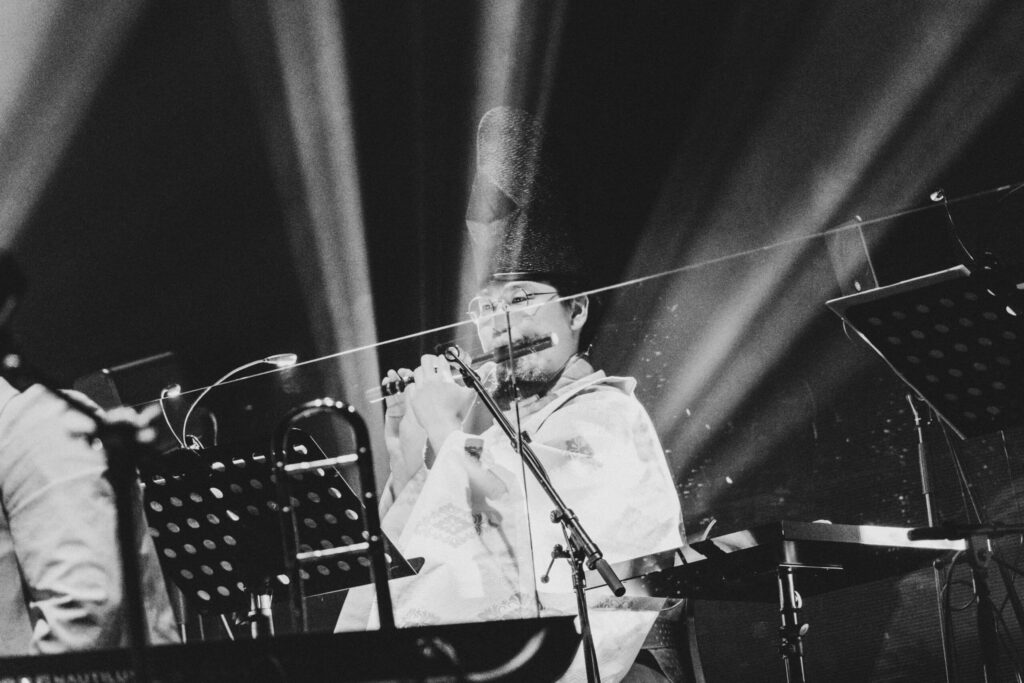
We also looked beyond instrumental timbre. The concert drew on kagurauta, songs associated with Japanese ritual traditions, and on the shōga of the shō. Shōga is not another name for kagurauta: it is a system of vocal syllables used to learn and transmit the musical lines of gagaku instruments.
Using these sung patterns as material for an arrangement offered a different kind of meeting. It brought a method of musical memory and training into direct conversation with new composition. Listening for the human voice behind an instrument opened another door between the two ensembles.
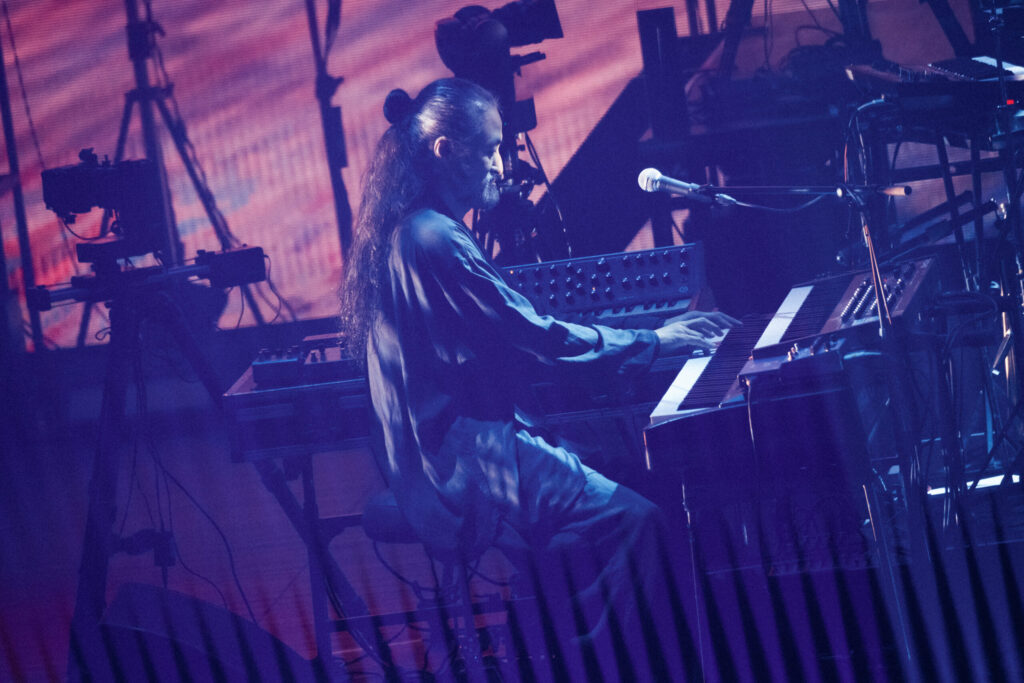
My role was not simply to write parts for gagaku instruments. We considered transitions, the order and emotional movement of the programme, moments when the band should lead and moments when the audience could hear the sustained sound of the traditional instruments without interruption. I was responsible for music direction and arrangements; I did not perform as an instrumentalist in the concert.
ROTH BART BARON songs including “Kemono no Namae,” “Dokuro to Hana” and “Mizu / Umi” took on new colours in this ensemble. I also participated in the collaborative creation of a new work, “UTUTU.” None of these ideas could have become a concert without the imagination and skill of the musicians themselves.
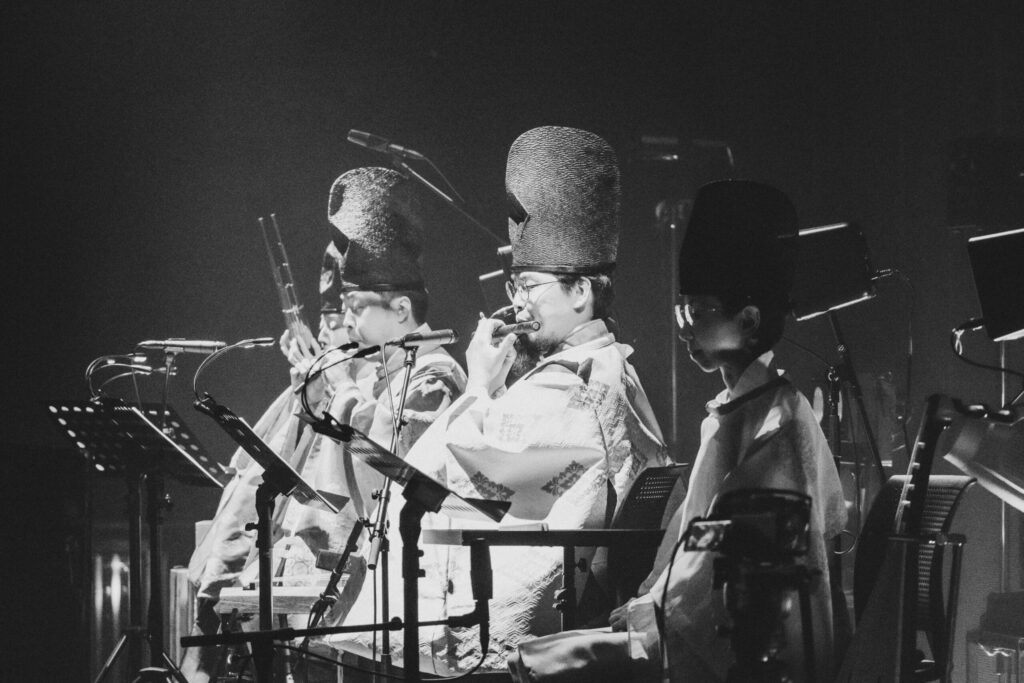
I want to say this plainly: the evening would not have happened without ROTH BART BARON. Their musicianship was matched by a genuine willingness to listen to unfamiliar traditions, ask difficult questions and try things that did not come with an established method. The respect they showed the gagaku performers was not ceremonial. It changed the way we made music together.
I hope people who came to this article because of Japanese traditional music will discover the band’s recordings, and that listeners drawn here by its songs will become curious about gagaku. I certainly intend to keep following their work. Please explore the music and concerts on the official ROTH BART BARON website.
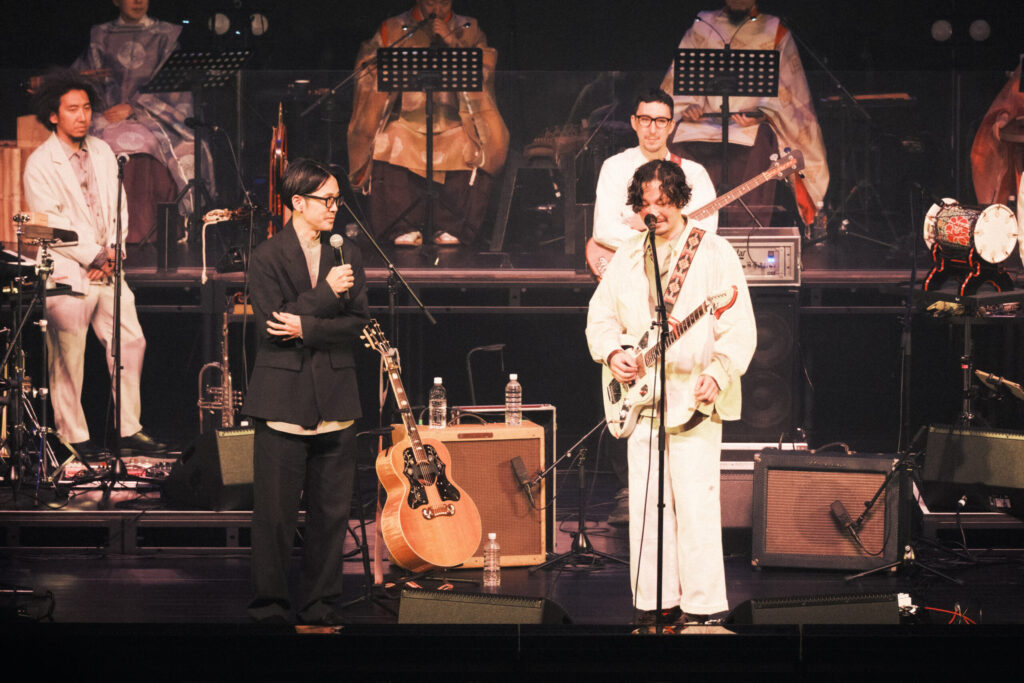
The band has released a live video of “Mizu / Umi” from this collaboration. It is one song rather than the whole programme, but it offers the clearest way to hear how rock and gagaku shared the stage.
Watch “Mizu / Umi” on YouTube — released by ROTH BART BARON.
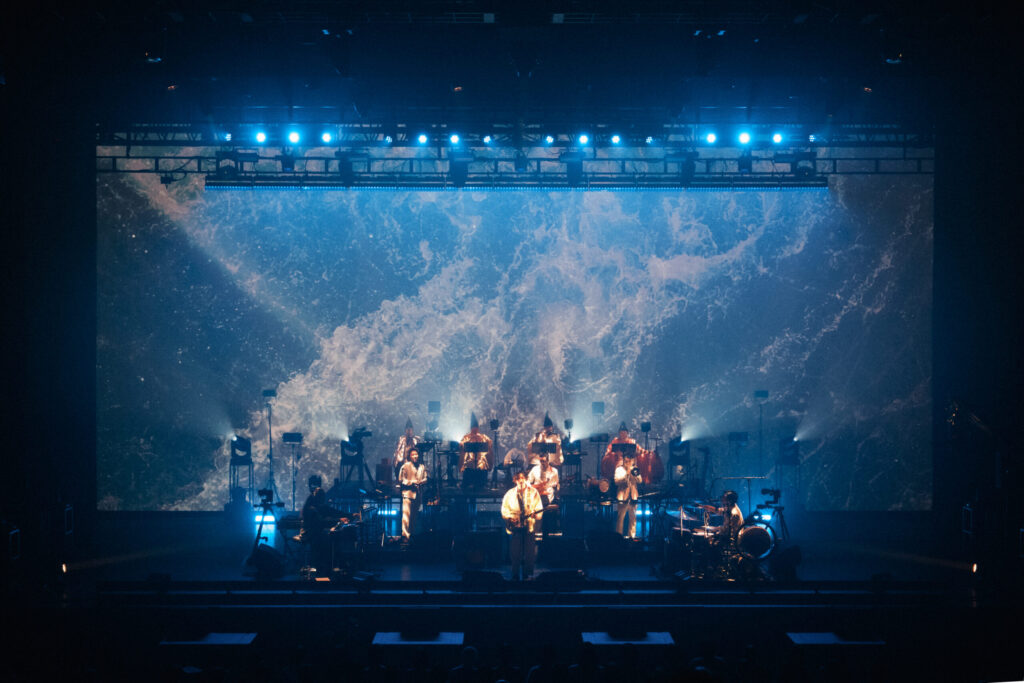
Before the performance, Masaya Mifune and I also spoke about gagaku, nature, inherited culture and the experience of musical time. The conversation is in Japanese, but the music and photographs offer another way into the story.
Watch the conversation on YouTube. Further reading: NiEW interview (Japanese), J-WAVE concert report (Japanese), and Drifter’s work archive.
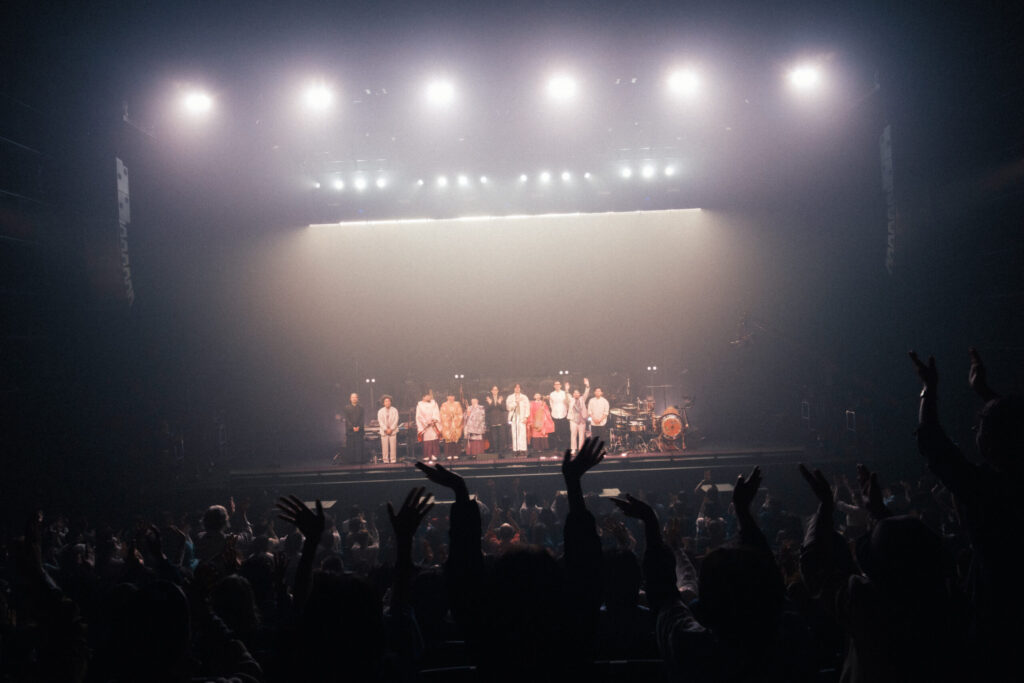
For me, the most interesting collaborations do not erase the differences between musical traditions. They make those differences audible. When two musical worlds meet with respect, a sound that neither could have made alone becomes possible.
Other languages: Français · Deutsch · Español · Italiano · Português · Русский · 한국어 · 简体中文 · 繁體中文
