
By Taro Ishida
There are moments when the shō, an instrument at the heart of Japanese gagaku, sounds almost electronic. Its breath-driven tones form a luminous, suspended resonance.
What fascinates me is not simply the resemblance to a synthesizer, but the way a sound carried through centuries can seem to exist outside any particular age.
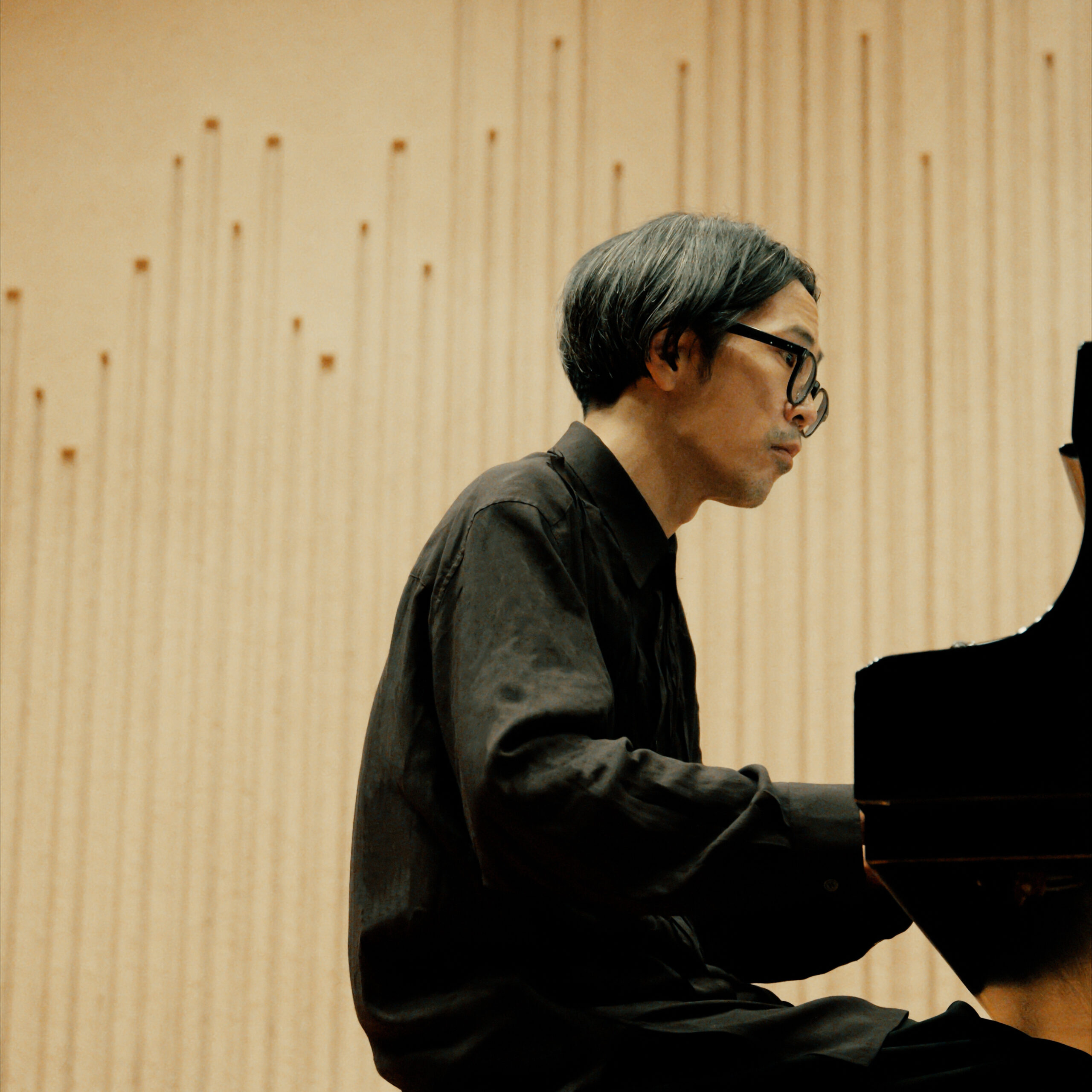
I am beginning a new project, SIX, with shō performer Hanako Nakamura. She plays the shō; I work with piano and electronic sound.
We are planning performances in Tokyo on 6 February 2027 and in Taiwan on 19 March 2027.
The idea is not to modernize an ancient tradition for contemporary ears. I want to follow something that has always drawn me to gagaku: the possibility that music can alter our sense of time.
Contents

Gagaku encompasses traditions of music and dance preserved in Japan over many centuries.
Among its instruments, the shō is a small bamboo mouth organ whose simultaneous tones produce a sound unlike that of most familiar orchestral instruments.
It can feel ancient and strangely futuristic at once.
For me, this is more than an interesting sonic comparison. It unsettles our habit of placing sounds on a simple line between old and new.
The shō does not need an electronic imitation to become relevant today; it asks us to listen differently.
Readers curious about the instrument can also explore Drifter's introduction to the shō.
Much of contemporary life is organized around deadlines, measurable progress and the constant need to move on. We count the minutes, and we judge whether we have used them well.
Yet our inner experience of time is rarely so straightforward.
When I listen to gagaku, sound can seem to change without hurrying towards a destination. After a while, I sometimes lose my sense of how long I have been listening.
It is as if another way of inhabiting time has briefly become available.
I am not searching for a return to an idealized past. I am interested in what this different sense of time might reveal about the present, and in what music can do that an explanation cannot.
SIX takes its name from the six traditional modes of tōgaku, one of the repertoires within gagaku.
These chōshi are not simply equivalent to six Western keys; they carry particular melodic and modal characteristics. The jp/dglib/contents/learn/edc22/en/category/kangen/on1.html">Japan Arts Council's introduction to the six modes provides useful historical context.
I have been especially drawn to the music known as chōshi as heard on the shō. Remaining inside those changing tones for an extended time can make the border between music and the time around it feel uncertain.
That perception is one of the starting points for SIX.
Projects involving historical instruments and electronics are often described as a meeting of tradition and innovation.
I understand why, but that description does not reach what matters most to me.
I do not believe that every encounter with art needs to end in understanding. Sometimes we encounter something unfamiliar and remain with it, without immediately assigning it a meaning.
I think listening can create that kind of space. Rather than make the unknown easier to explain, I want to discover what happens when we allow it to remain unknown.
A point of reference is my arrangement of “Banshikichō no Chōshi” (盤渉調調子) from the album TOKOYO (常世). This recording is not a performance of SIX.
It is simply one example of how I have approached the particular sense of time I find in gagaku.
The piece begins at 7:47 in the official full-album video below.
Listen to “Banshikichō no Chōshi” on Taro Ishida's official YouTube channel (from 7:47).
With SIX, I hope to venture further. Perhaps the most interesting thing will not be something a listener can immediately describe, but the quiet realization that time has begun to feel different.
Other languages: Français · Deutsch · Español · Italiano · Português · Русский · 한국어 · 简体中文 · 繁體中文
